
The Stalin Museum
A Google search of “Gori, Georgia” may not create an image that would interest the average traveler. When I do such a search, of the twenty four pictures on page one, five show soldiers with a backdrop of rubble, three show the aftermath of a bombing near an apartment building, two are of bodies, and one is of a burning tank. For comparison, a Google search from my computer of “Baghdad, Iraq” finds only one such image that fits into any of my above categories; one even shows a pool at a resort from when that city was a much different place.
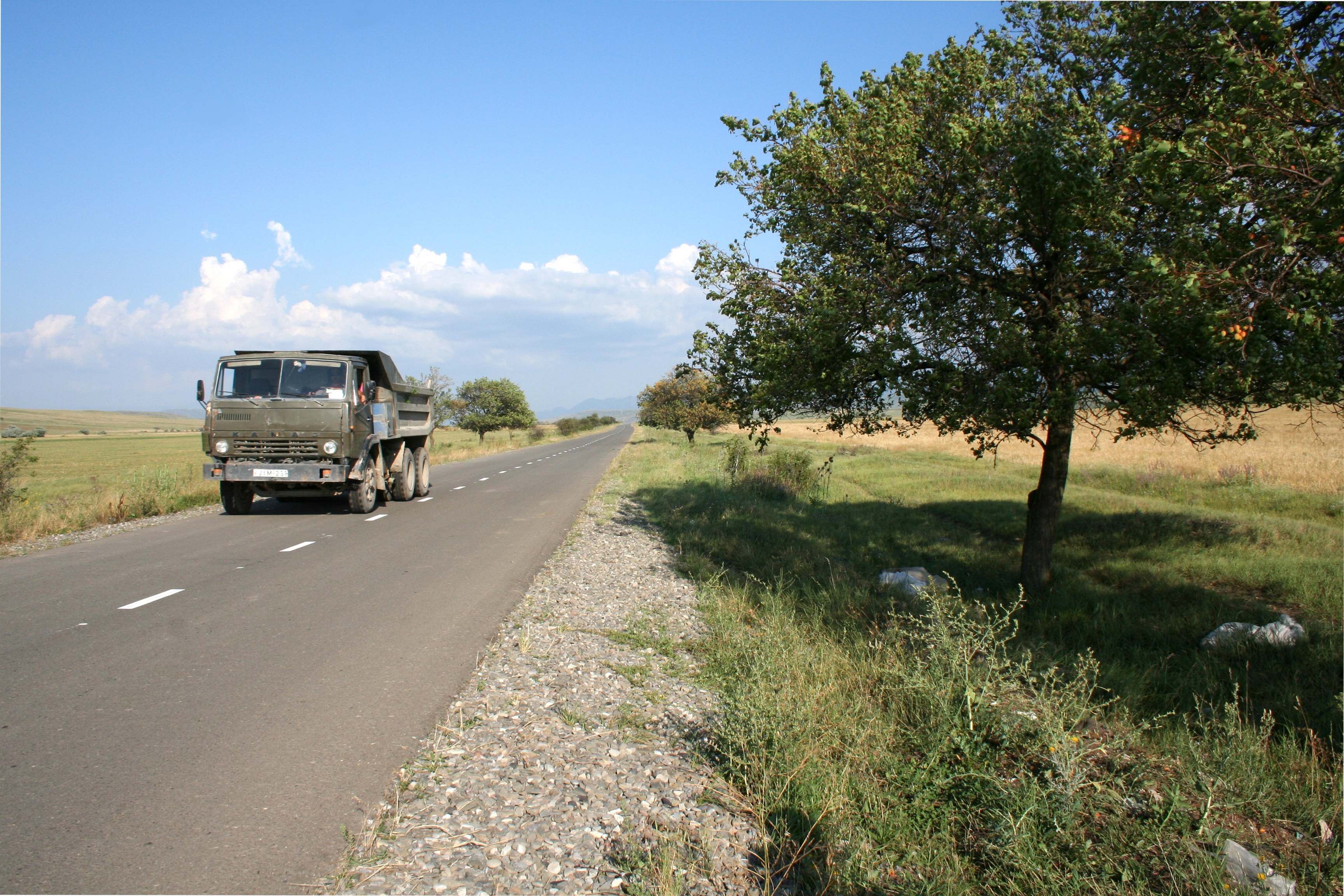
To understand why this is, and more importantly why Googling can be a dangerous and misleading process when it comes to travel; I have to digress into recent history for a moment. In essence, the area around the Caucasus Mountains has been ravaged by post-soviet, ethnic, and religious tensions for decades. Though each of these struggles is unique, they are most well known to the outside world through the conflict in Chechnya, which has led to the highly publicized bombings of commercial aircraft, a hostage situation at a Moscow theatre, and countless other atrocities often involving young female suicide bombers. In the Republic of Georgia, Abkhazia and South Ossetia are the primary centres for these conflicts.
In August 2008, war broke out between Russia and The Republic of Georgia over South Ossetia. Most of the fighting took place in the cities of Tskhinvali and Gori. Tskhinvali resides in the southern end of South Ossetia, and was decimated over the course of the fighting. Less than fifty miles south is Gori, in the Republic of Georgia, which fared somewhat better. However, Gori was bombed numerous times, and occupied by Russian forces over the course of the war. By the end of the fighting; Georgia had lost territory around both Abkhazia and South Ossetia, hundreds of thousands of refugees had fled into Russia and Georgia, and more than three hundred civilians had been killed. Four years, later in 2012, the border is essentially closed, refugee housing has sprung up along the road from Tbilisi, and Gori is still coming to terms with the scars of the fighting.
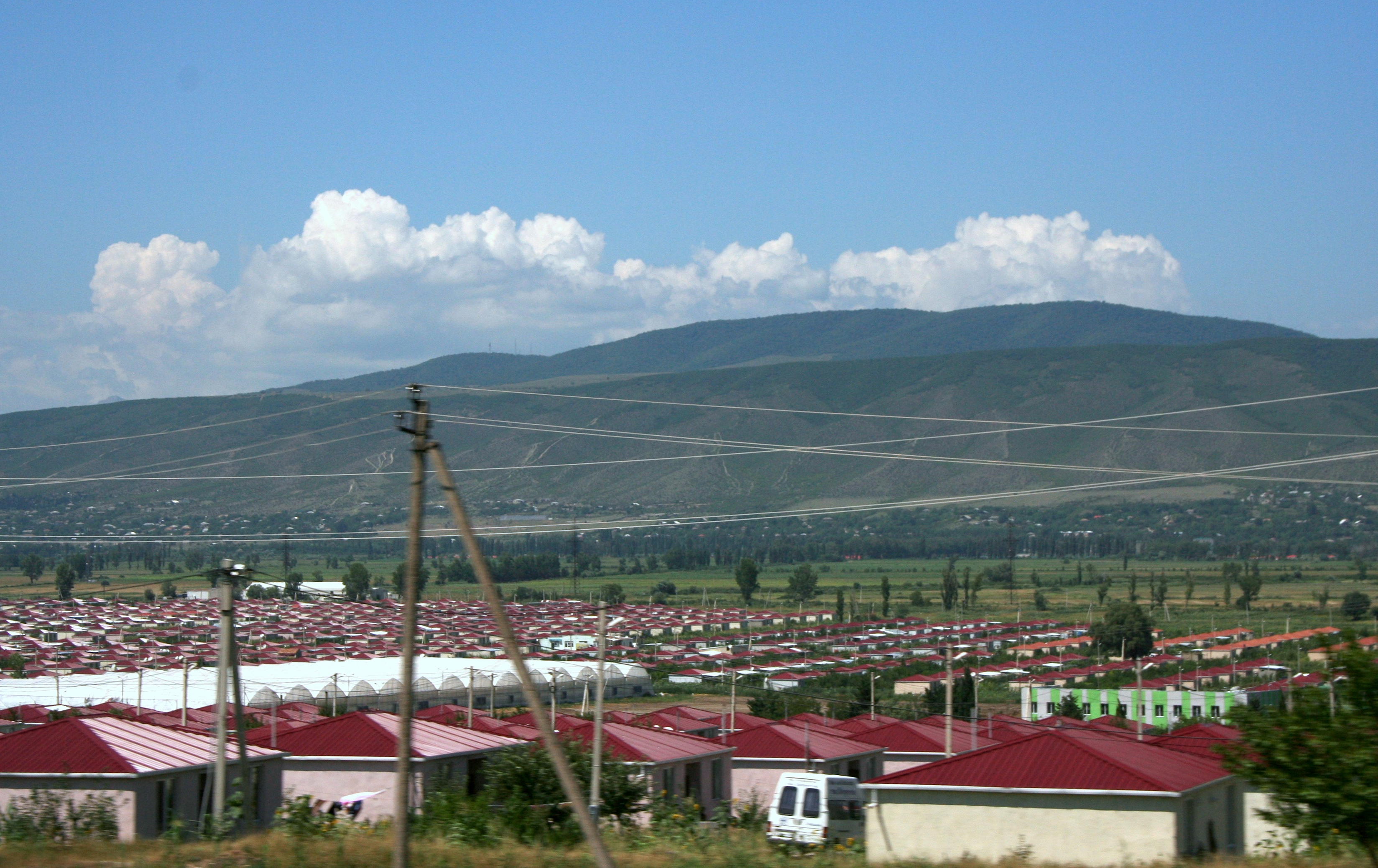
If that isn’t a roaring advertisement for Gori then I don’t know what is. While the war ended just four years ago, the physical scars in Gori are all healing well, almost no visible damage remains within the city. While there is an essentially militarized border to a breakaway nation just a few miles to the north, the city is an overall safe place, and there are good reasons to see what it has to offer. Almost none of these things would be apparent to the average Googler.
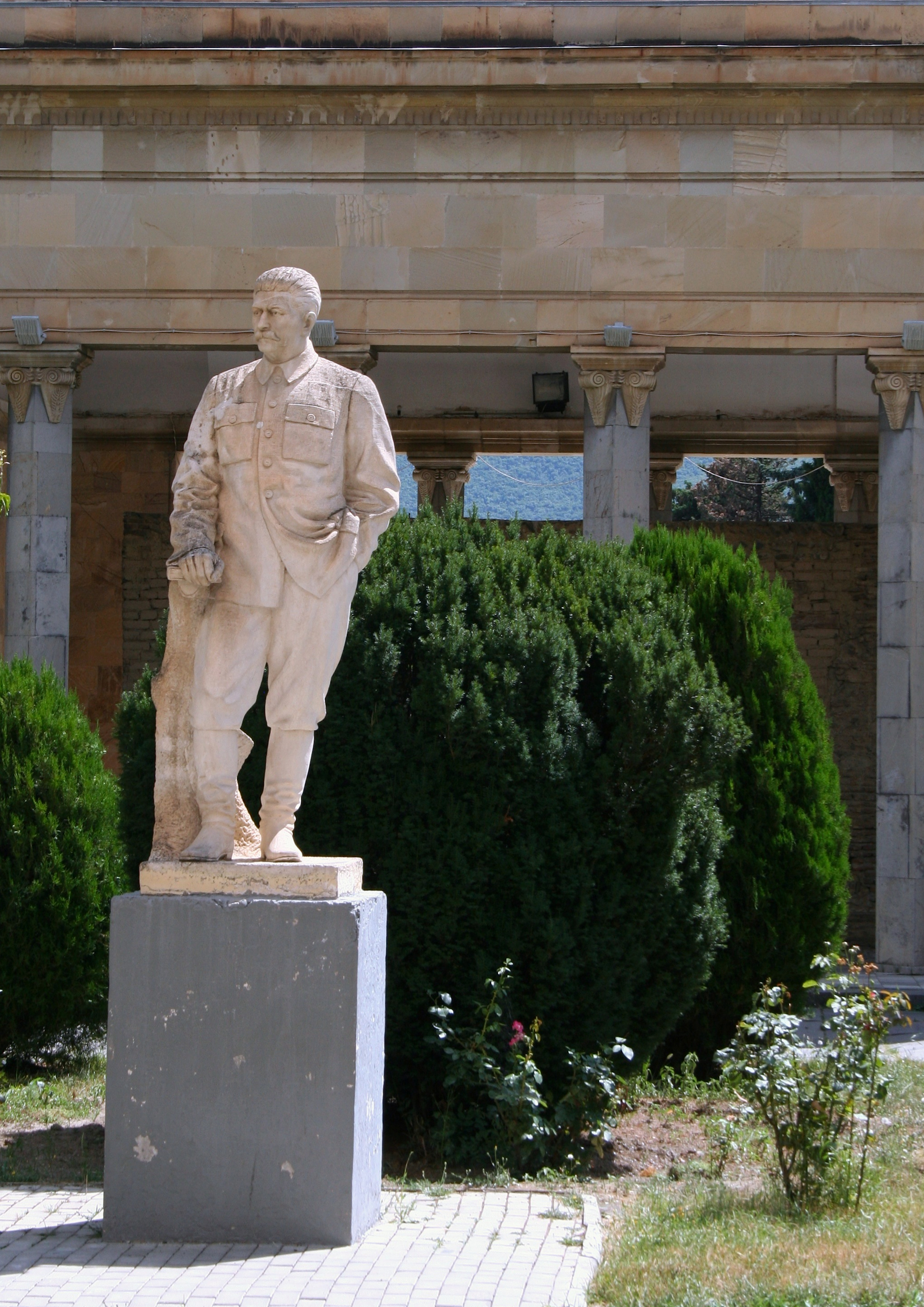
The Joseph Stalin Museum is one of those reasons. It is a good example of those strange places that’s existence can only be fully accepted by being in it. Built in 1951, it was fundamentally an attempt to preserve the cult of Stalin long after his death, which took place two years later. Like most endeavors to create some form of immortality, the museum is becoming more and more appropriate for the time in which it has found itself, and less of a shining monument to Dear Father. The museum is nearly unchanged since it opened six decades ago. This means it is both an interesting glimpse into a moment in time, but also somewhat laughable to anyone who can remove themselves from the monster that was the man.
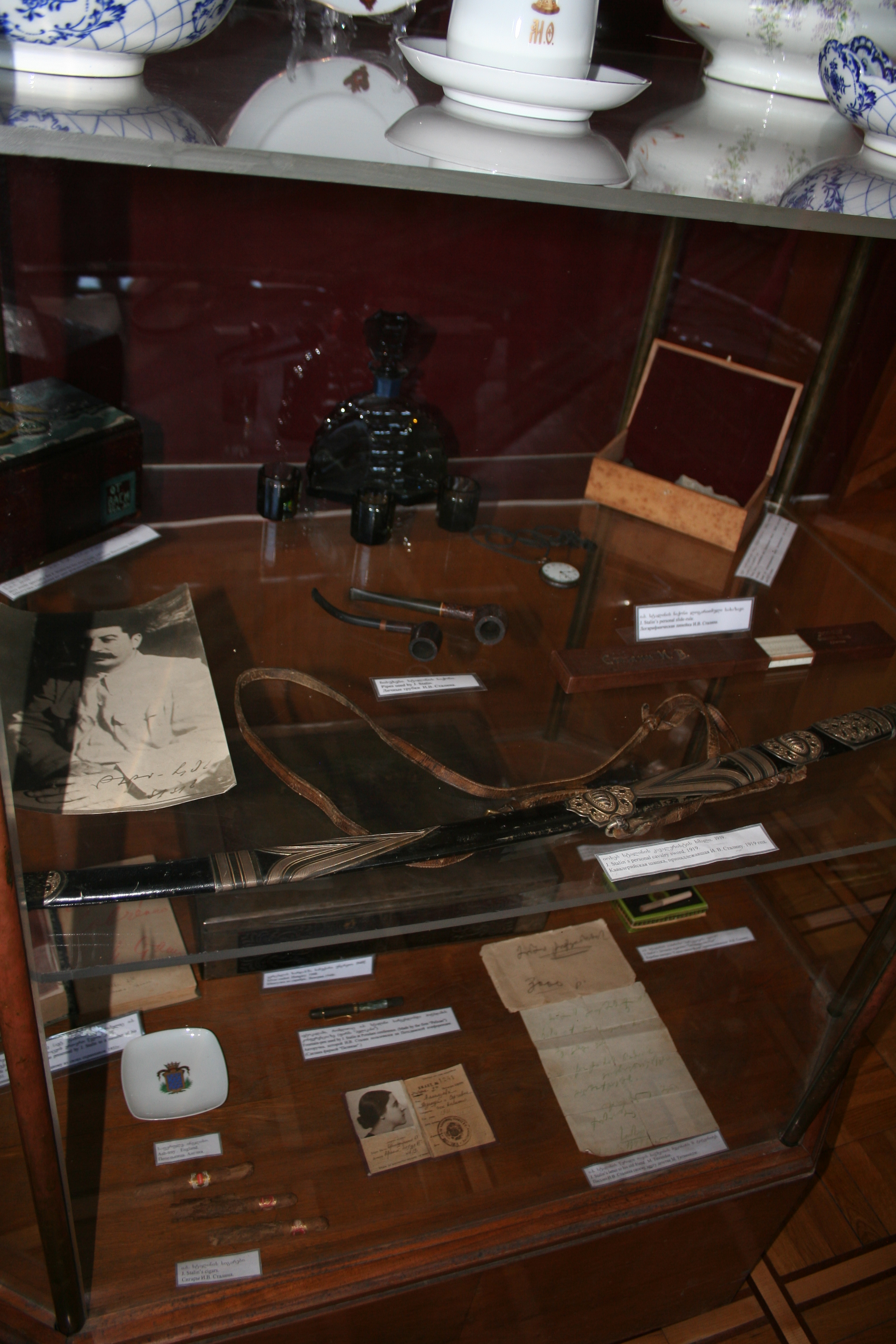
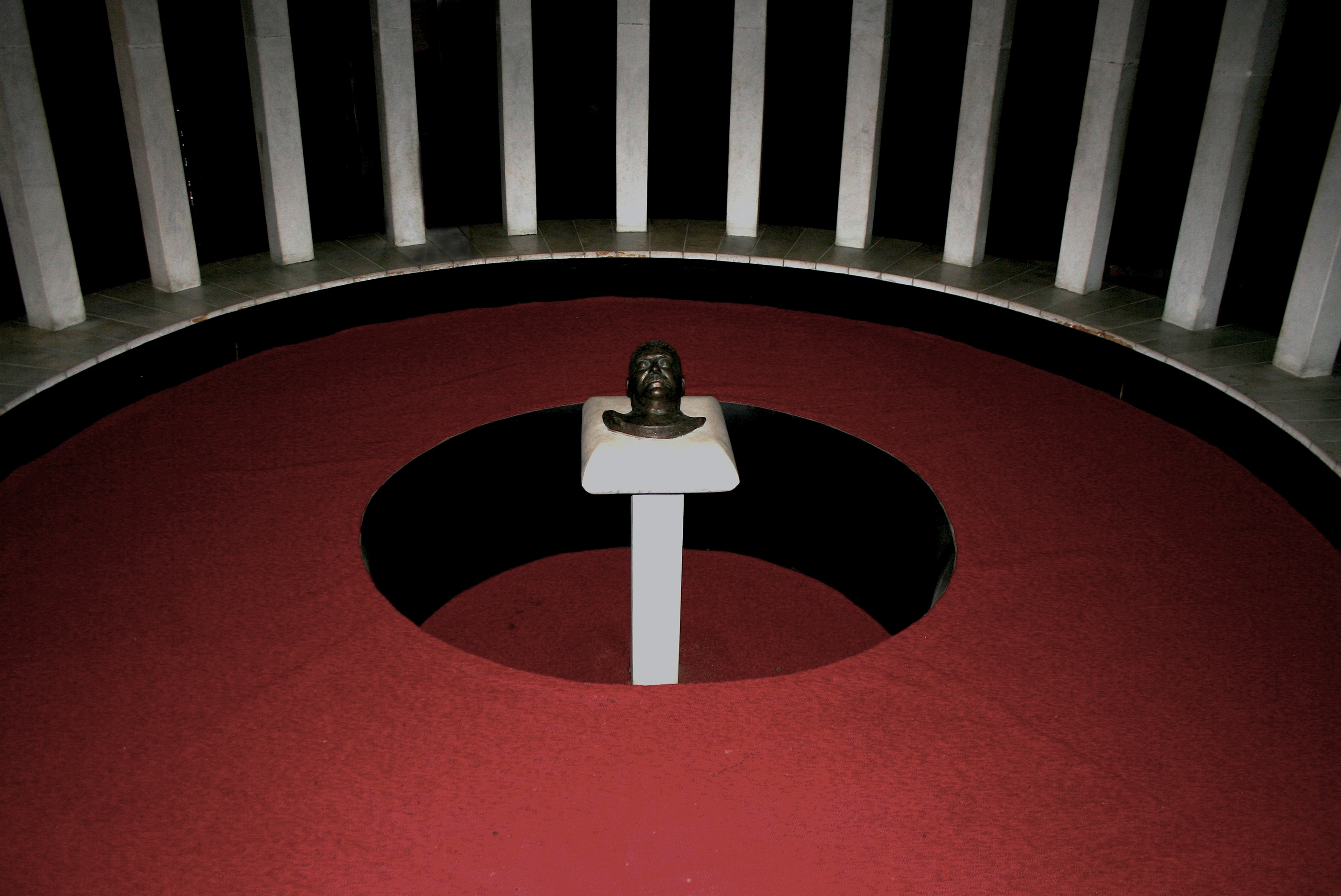
A guided tour, included in the admission, scurries through a half dozen rooms that begin at Stalin’s early life in Georgia. Each room contains a variety of photographs and documents that help to demonstrate the greatness that was Joseph. Artifacts are sprinkled about, most allegedly owned or used by Stalin, some more likely than others. A desk lamp supported by a tank that holds a radio. Coats. Hats. A sward. Cigars, and office furniture. Pictures of his son Yakov in a German concentration camp illustrate the love Stalin had for all his children of the USSR. Or so we are meant to believe through the associated story of his refusal to trade German prisoners for his own biological son, resulting in Yakov’s death. Following the rose-coloured walk through the life of Uncle Joe, we came to a large round room with red carpet and a smaller central circle of thick white square columns. In the middle of these bars, a bronze death mask of Stalin sat atop a short marble pedestal.
In many ways, it was an underwhelming moment, much like his death from a stroke. There on a polished rock was the face of a man responsible for tens of millions of deaths looking nothing more than dead himself. After wandering through rooms and rooms of pictures showing life, albeit an edited one, here at the end was a nearly bare room with a dead face in it. I liken it to the aforementioned dangerous idea of Googling. Take serial killers for example. Sometimes they are underwhelming, and get to hang out with Rosalynn Carter.
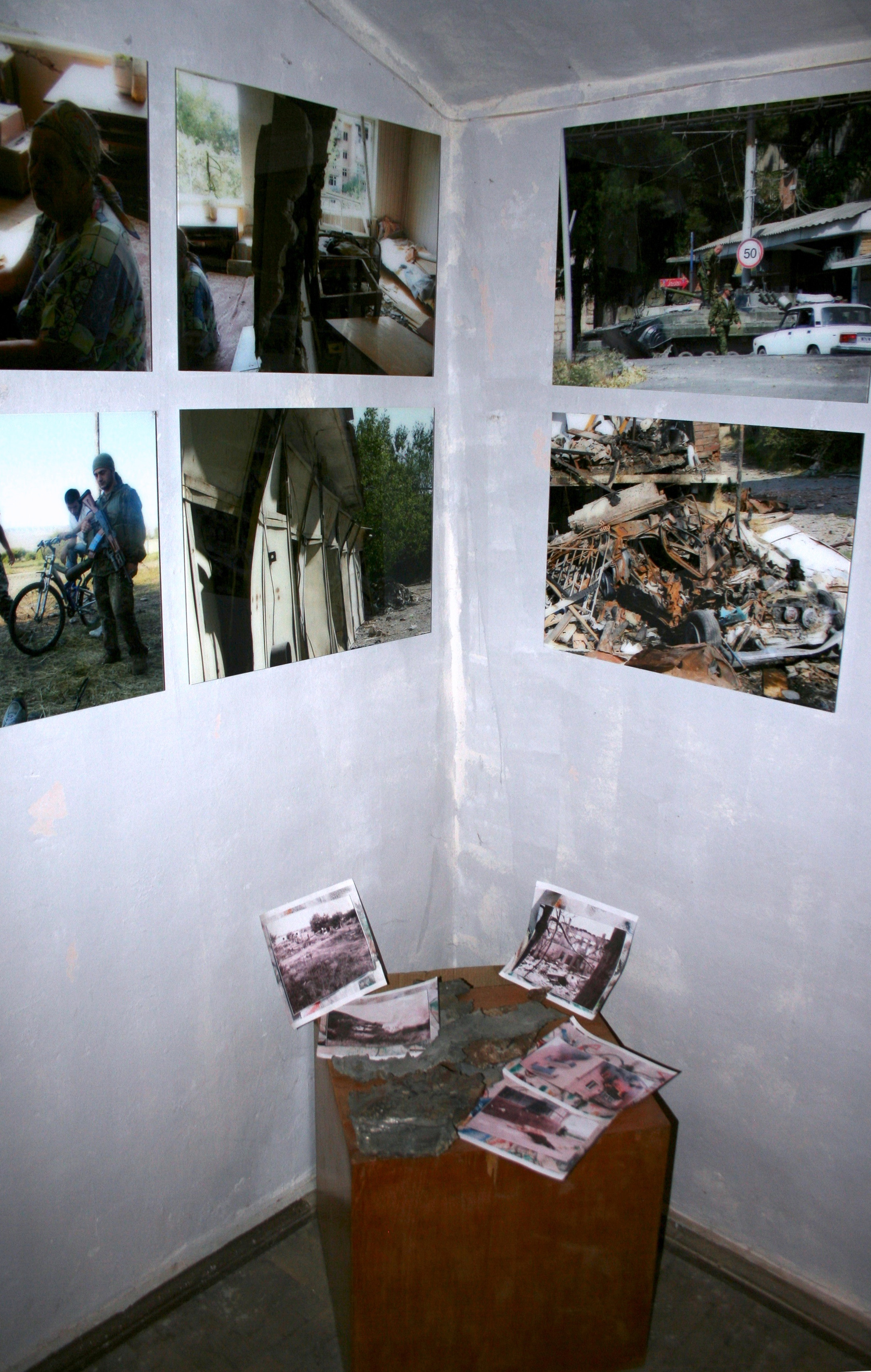
Downstairs, next to the ticket window, the old static museum within a museum is getting a face-lift, thanks in large part to the South Ossetia Five-Day War; The Museum of Russian Aggression. Currently only one room, it contains a corner with a few pictures of the damage from the bombings, and a large piece of metal picked from the rubble. How much the undertaking will expand beyond this hidden space is uncertain. If nothing else, one corner of one room in Joseph Stalin Land (not to be confused with “Stalin World” in Lithuania) will for now speak to the situation that still plagues the less powerful people of the region.
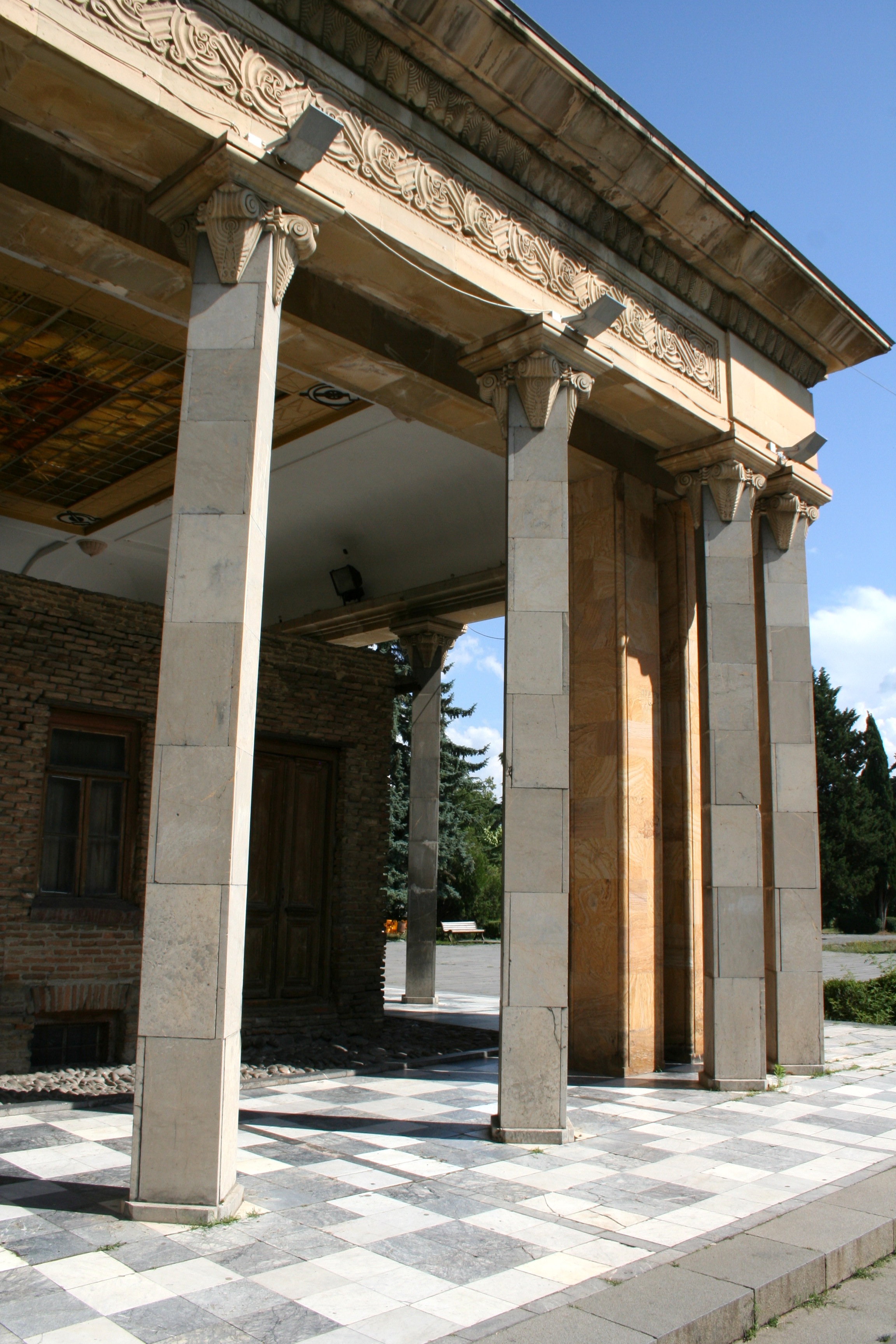
Having taken a moment to consider the death of Stalin and those involved in the 2008 war, we were directed outside to a large open pillared structure with a stained glass ceiling. Sheltered underneath from the rain and on occasion, bombs, is a small mud home. The one in which Ioseb Besarionis dze Jughashvili was born, and spent the first four years of his life with his abusive parents. The name Stalin, a derivation of steel in Russian (сталь) only came to be after various stays of exile in Siberia. The modest nature of his childhood home is hardly unexpected; all good dictators come from poverty. I generalize. But in all reality, what could be more soviet? Even if it were nothing but a charade, the small two family home fits neatly into the story illustrated by the museum of rising up through the political oppression of his youth.
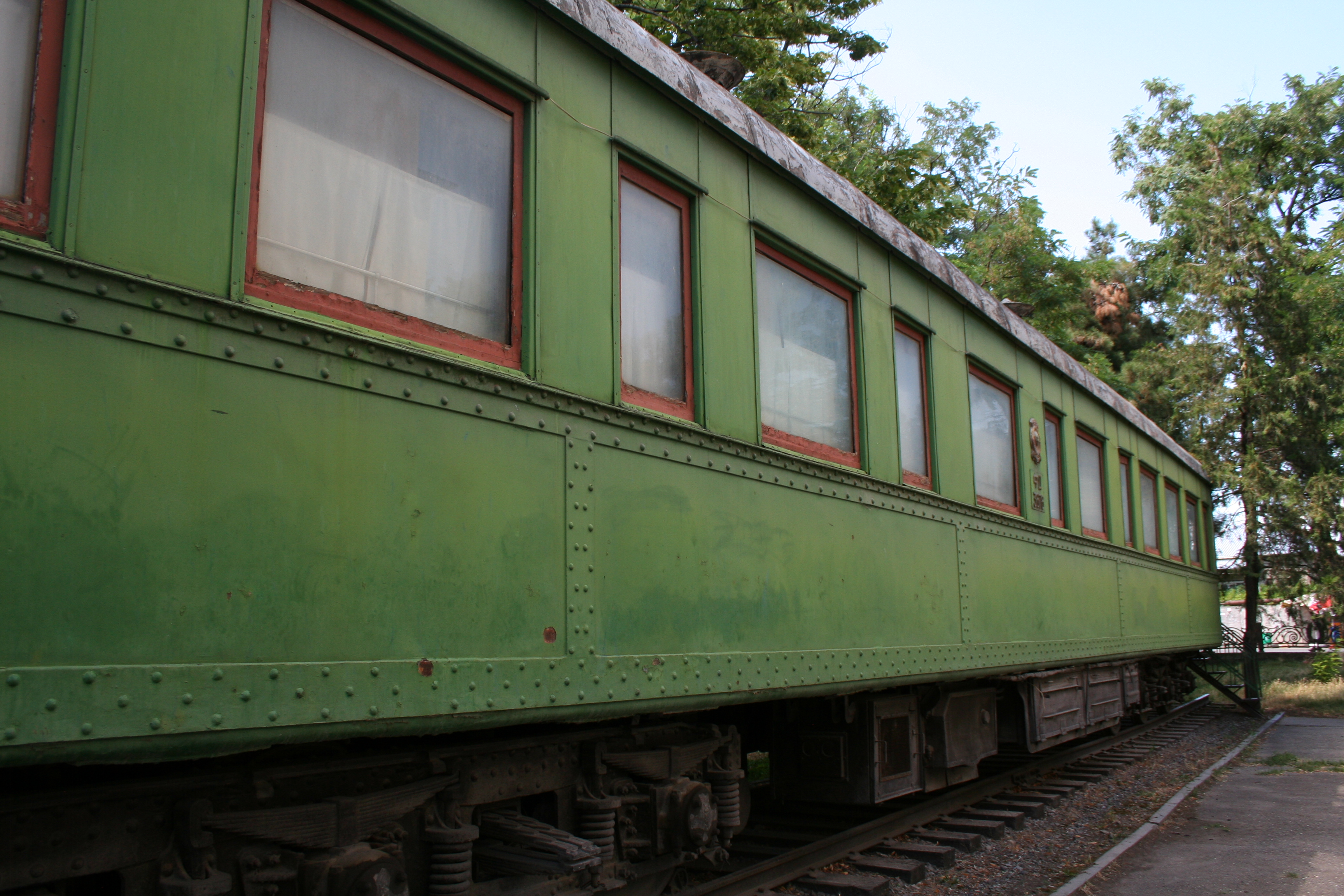
Around the corner form the home, and nestled under a nice shaded area is the train car Stalin took to the Yalta Conference where he sat as one of the “Big Three.” The train is an asparagus green, peeling and rusting around its edges. While the car is not as physically imposing as the museum, or even the structure covering his house, it’s weathered outside made it seem more real, more intimidating. Despite the fact that it was a hot and sunny day, the train seemed like it should have been sitting in a midnight sun surrounded by deep snow. There were no placards or signs, just the carriage on a disconnected rail. Inside, the amenities were nice, and not as fear evoking. The asparagus green carried over into the wallpaper. Back outside, it sank in that the decaying nature of the car gave it a sense of life and age. That sense of life is how it seemed to hold memories stronger than the better-tended areas of the museum.
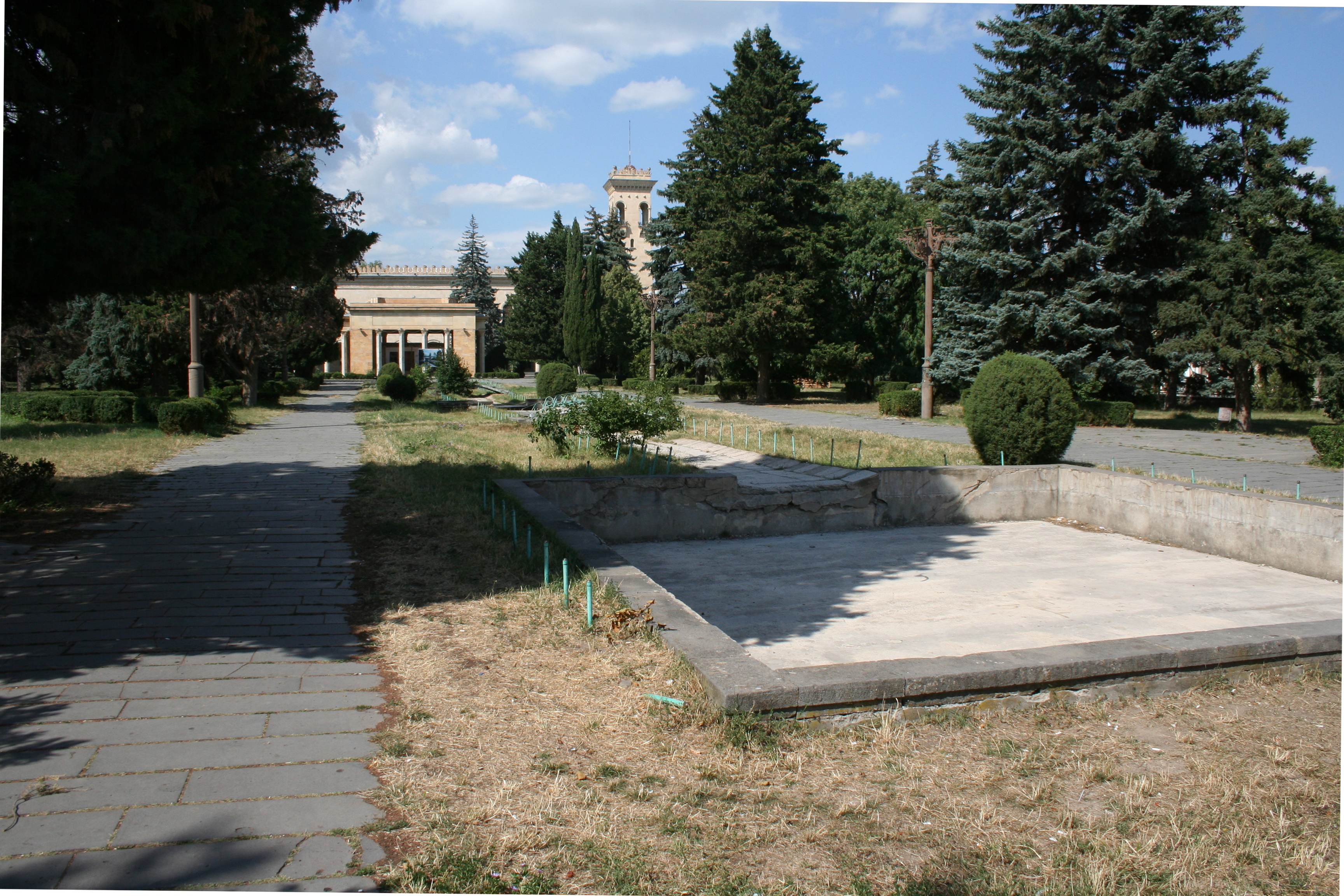
In front of Stalin’s childhood home is an awkward abandoned park. We walked through it with the assumption that it had once been, and had since fallen into disuse. Further digging has revealed something of the opposite to be true. There is a long concrete trough interrupted by square pools. Each empty of water, and slowly falling into itself. There are park benches. Each broken in multiple places, and often splashed with graffiti. The grass was dead and trampled into the ground. The bushes, only barely kept. In 2010, one of the few remaining statues of Stalin was removed in the dead of night from in front of Gori City Hall to be replaced by a monument to the victims of the 2008 violence. The removed statue was meant to end up just down the road at the Stalin Museum. Two years later, this derelict park and a hole in the ground topped by an artist’s rendering are all there is to show for this new old attraction. A part of me hopes that the park doesn’t change too much from its current state. It has the same allure as the aging train car, and seems to hold in it some truth.
17 July 2012
 Steerage Yearns