
Memorialul Renaşterii
On my first trip to Romania in the summer of 2011, I came across a rather large white sculpture of a spike. It was interesting to me, but I only ever encountered it from taxis or busses on the road that passed it. My traveling companions, even those who had been to Romania on multiple occasions either did not know what it was, or simply wrote off my questions about it with “It’s for the revolution.” I accepted that it was some random monument, likely not of much importance, and carried on with my life. The only picture I took was a passing shot from a bus, and purely for its interesting aesthetic value. When I returned in the summer of 2013, I encountered the monument again, but by then it had been changed ever so slightly. That subtle change opened up a discourse about the monument, and the feelings people have for it.
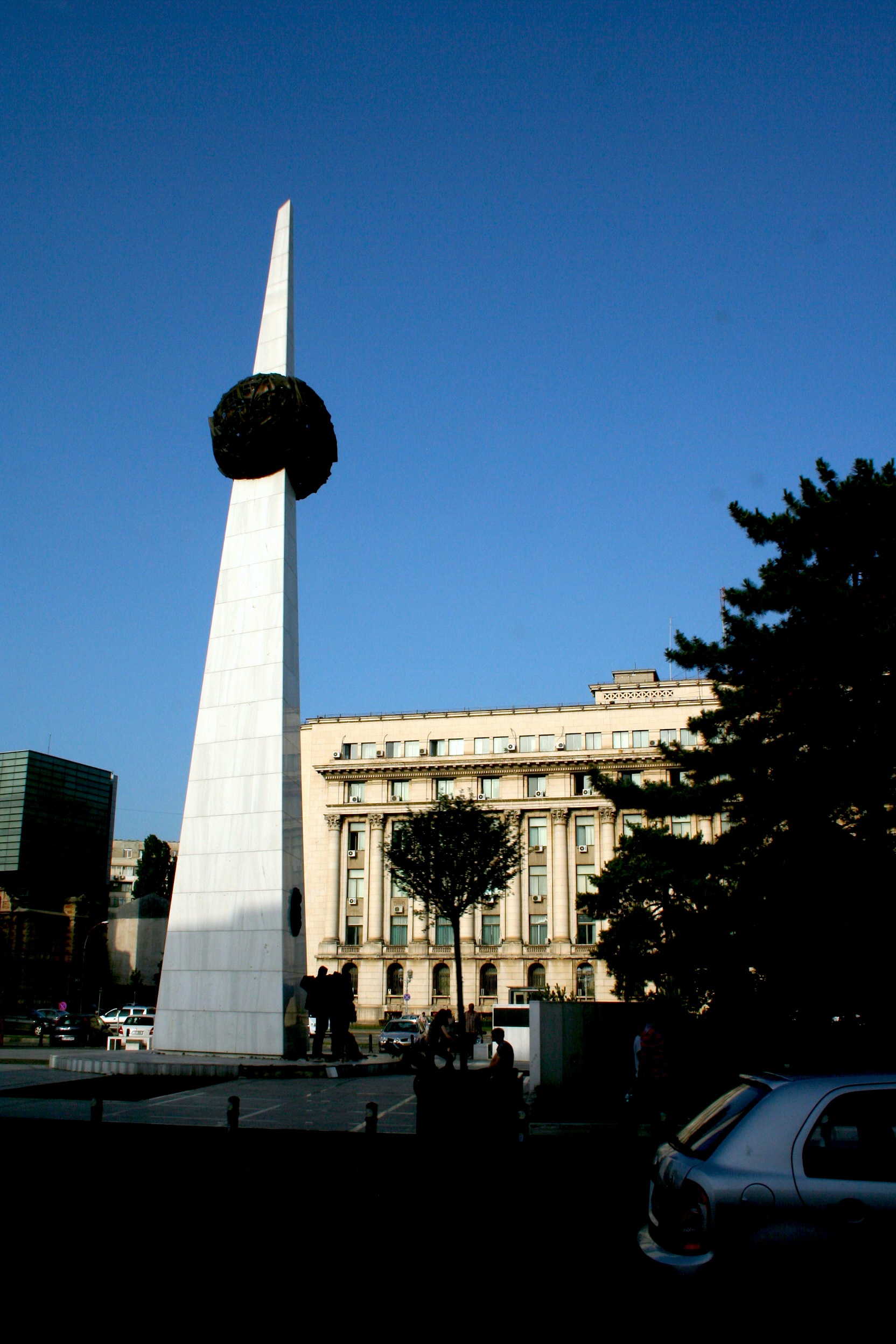
The sculpture I am talking about is the Memorial of Rebirth (Memorialul Renaşterii) in Revolution Square (Piaţa Revoluţiei) in downtown Bucharest, Romania. The square got its name after the 1989 revolution, which began there, and ended with the overthrow of then communist leader Nicolae Ceaușescu. On December 21st, 1989, Ceaușescu gave a speech from a balcony overlooking the square, as communist leaders tend to do. This time however, the crowd turned on him. To make a long story short, the revolution spread across the country. Communism was overthrown, and Ceaușescu was executed four days later on Christmas day.
The revolution is still fresh in many people’s minds. Some individuals from older generations regret it and long for the good old days of communism. Others, too young to remember or have experienced it first hand look back almost in admiration for the way things were. Often times confusing the idea of equality with the practice of the communist state. Most of my friends who were there look back on it with mixed emotions. They make small jokes about the revolution, and how stupid they were to have been out in the streets, or going to school in the middle of riots; age having given them a sense of the danger in which they had actually been. When we talk about the revolution, some of them will glaze over after making a lighthearted comment. Smiles will slowly fade, and their eyes will go back more than two decades to when they were twenty years old, out in the streets trying to go to the store through a riot, and the fear of that moment comes rushing forward into now.
However, this isn’t a bout the history of the revolution, or the political changes in Romania since then. It is about people’s feelings concerning something they experienced first hand, and what happens when you try to solidify that feeling with something material. It is just a fact that monuments are controversial. The more recent the story being commemorated is, the more controversial the monuments are. In the case of the Memorial of Rebirth, a turning point in the lives of nearly everyone living in Romania is being taken out of the minds of those who stood in the streets, and petrified into a silent steel and stone tower.
In August of 2005, the monument was presented to the people of Bucharest and the world. The monument is a 25-meter (about 80-feet) tall skinny three-sided pyramid of white marble topped with a metal crown. At its base, there are some abstract human figures and a large fingerprint in metal. It ended up costing almost twenty million US Dollars. The general reaction? People hated it. Everyone knew it was a monument to the revolution, but no one seemed to understand how. It quickly gained a number of nicknames that people thought represented it better. The Potato on a Stick. The Brain on a Stick. The Penetration Monument. The Olive and Toothpick. The Pipe and Testicle. The Missed Circumcision. Some are clearer than others.
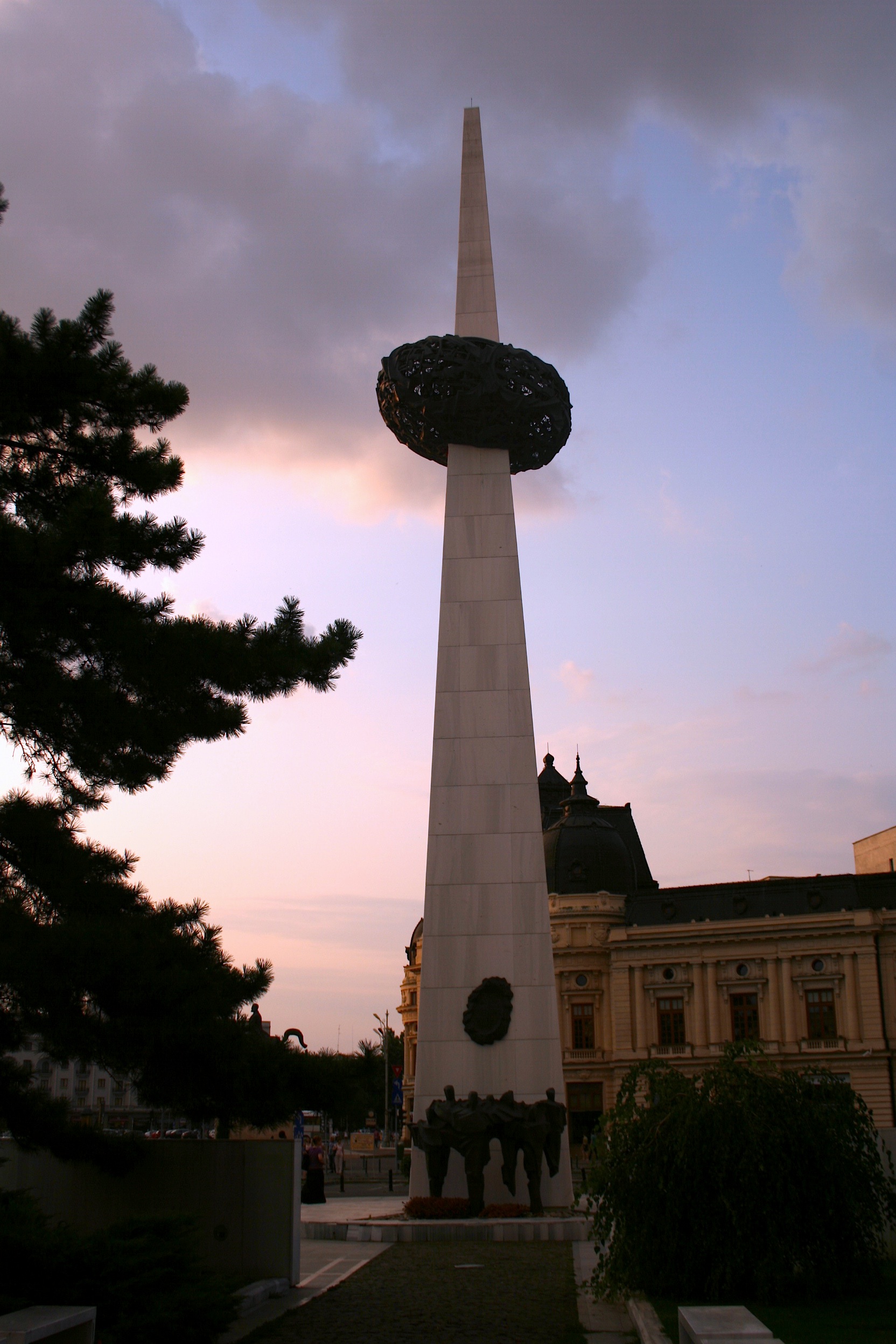
The number one reason I was given by people as to why they hate it is it doesn’t make any sense. It looks like modern art, not a monument to lives lost and a moment in history. What does a potato on a stick have to do with the sacrifices people made so Romania can move forward? Almost everyone wanted something a little bit more literal. Take someone unaware of the symbolism of the monument, but fully aware of the history of Romania and he or she likely wont understand it. Like I said earlier, I essentially wrote it off as a random monument or even art for the sake of art not long ago. So what does it actually mean? Why does the Olive and Toothpick actually do a pretty nice job of representing the Revolution in Romania? It is a lot more literal than most people expect it to be. My interpretation is embellished slightly with my own views, but is based on the basic idea that the elements have simple one to one correlations with what they represent.
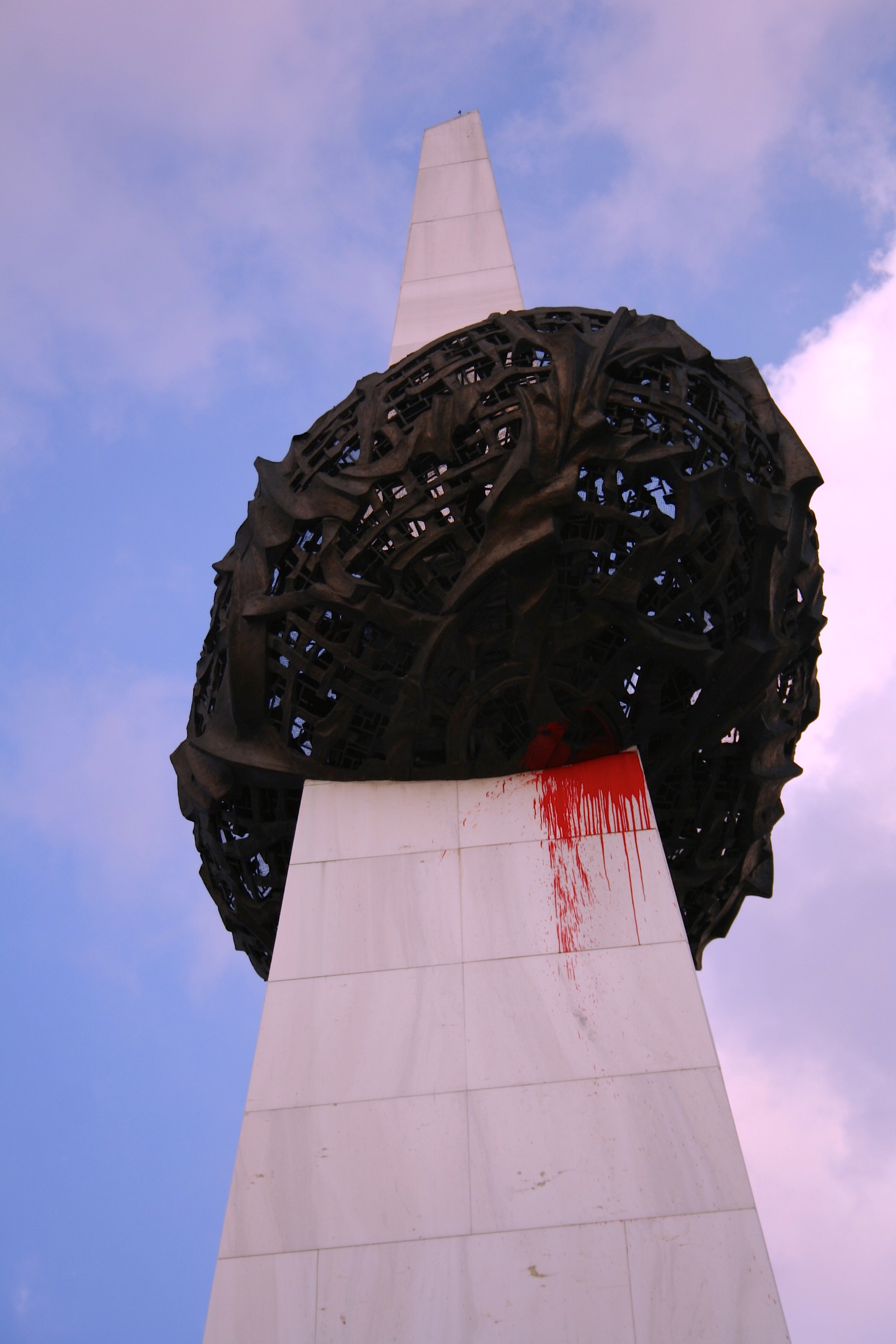
The white spike is democracy. It is large and imposing, but relatively pure and clean. There are blemishes in the shiny white marble, but it makes it. It is solid and well put together with nice interlocking plates that function as a whole to hole it together. The potato is communism. It is dark and poorly organized. There are holes in the structure that from the right angles you can see right through to the clear sky on the other side. It is hollow and has no real substance to it. Democracy has literally torn into communism and come out on the other side. And what about that big metal fingerprint? That is the fingerprint of communism. Even though democracy has prevailed and Romania is a better place than it was before in many people’s eyes, the fingerprint of communism will always be present. Now, the man who designed the monument, Alexandru Ghilduş, is apparently more known for his work on things like furniture. But that is from Wikipedia, so who knows. Maybe the meanings are totally different than those I have been given by locals and embellished on myself; maybe it has no real meaning at all.
What about that change I mentioned that happened sometime between my first visit in 2011 and my most recent in 2013? Sometime in that period, someone shot at the monument with a paintball gun, or launched a balloon of red paint at the potato. The perfectly placed shot created a smear of red paint that drips down the side of the spike from the bottom of the potato. A fellow American tourist told me it was rust, which is nonsense, for anyone who has been exposed to that idea. The vandalism seems to have improved public opinion of the monument by just a little bit. There was talk of having it cleaned, but people liked it and so it remains. I think for a lot of them, they are just happy to see something relevant to the revolution and the loss of life it is responsible for. It is a stain on democracy from the deaths it took to kill communism. More than a thousand people died as a result of the revolution, and a lot of people today shake their heads at that thought.
The monument is facing another issue less than a decade after its inauguration. Lack of interest has led to a lack of care. The monument is already starting to fall apart in some areas. Pieces of marble at the base and broken and missing, the lights that bathe the spike in light at night have been out for months, maybe even years. There are no longer guards present at the monument twenty-four/seven as there once were; so the threat of further but less appropriate vandalism is ever increasing. In some ways, it seems to reflect the feelings many Romanians have about their current government. By no means do I think democracy is falling apart in Romania like it is at the monument, I simply mean that the transition takes time, and for some people democracy like the monument are not exactly what they were expecting.
Personally, I like the monument as a piece of art. It has high contrast, a combination of different line types, and it is easy to make up a story about it. As a monument to a revolution however, it does not capture the thing that the people find most important to remember. The individuals who fought and died for what they believed was right. The monument captures a change in government, it is sterile and impersonal. There are names in the square of those who died, but they are by no means the focal point. Certainly the transition from communism was important, but it is not what truly needed to be remembered. That is where this particular monument falls short of others. Every monument will be controversial; never will everyone agree on the design choices, or the story to be solidified through public sculpture. However, the Monument of Rebirth in Bucharest tells the story of overthrowing communism in a communist way. The individual was removed from the memorial and only the whole, through the change in government, was represented. Whoever made the potato bleed is owed a huge debt of gratitude. For they put back into the monument what everyone thought needed to be centre stage from the start, the people who were lost.
 Steerage Yearns
We just returned from Romania and were puzzled by this memorial. We could only find vague references to it in our travel book. I was pleased to learn of the details here. And yes, we here in the U.S. had our own controversy over the Vietnam Memorial in Washington D.C. Lots of people said they found the design lacking and several sculptures of soldiers have been added nearby to personalize it. So, indeed, your comment about accepting a new memorial to personalize something so tragic is hard to accept by those who actually lived through the event.