
Catedral de Sal
Tucked into the foothills of the far northern Andes Mountains outside of Bogota sits a towering black entrance to what could be a giant abandoned train tunnel, or some sort of cavern. It stands in stark contrast to the lush green forest that blankets the hill behind it, and acts as a black hole, no visible light extending further than the first few feet inside despite the blinding sun outside. The only clue to its status as what most people would consider a place of illumination and hope, a concrete cross that sits atop the abyss.
We sat outside after buying tickets, and hopefully telling the driver that we wanted a ride back to the city later. A small white dot of light grew from within the black, and upon exiting, explained that he and his yellow hardhat-headlamp would be our tour guides on this beautiful day through the Zipaquirá Salt Cathedral. After stepping inside the largest rock salt deposit on earth, I quickly realized the cathedral is far less threatening from the inside than the out. A light at the end of the tunnel is visible for much further than just a few steps inside, and the crystal spattered walls sparkle lightly in passing. The spaces carved out of the rock are gently covered in stripes of previously solid and untouched two hundred million year old geology. The layers formed unbroken grey walls from a far, but just slightly closer up, the grey separated into distinct blacks and whites with flecks of sparkling clear sprinkling about.
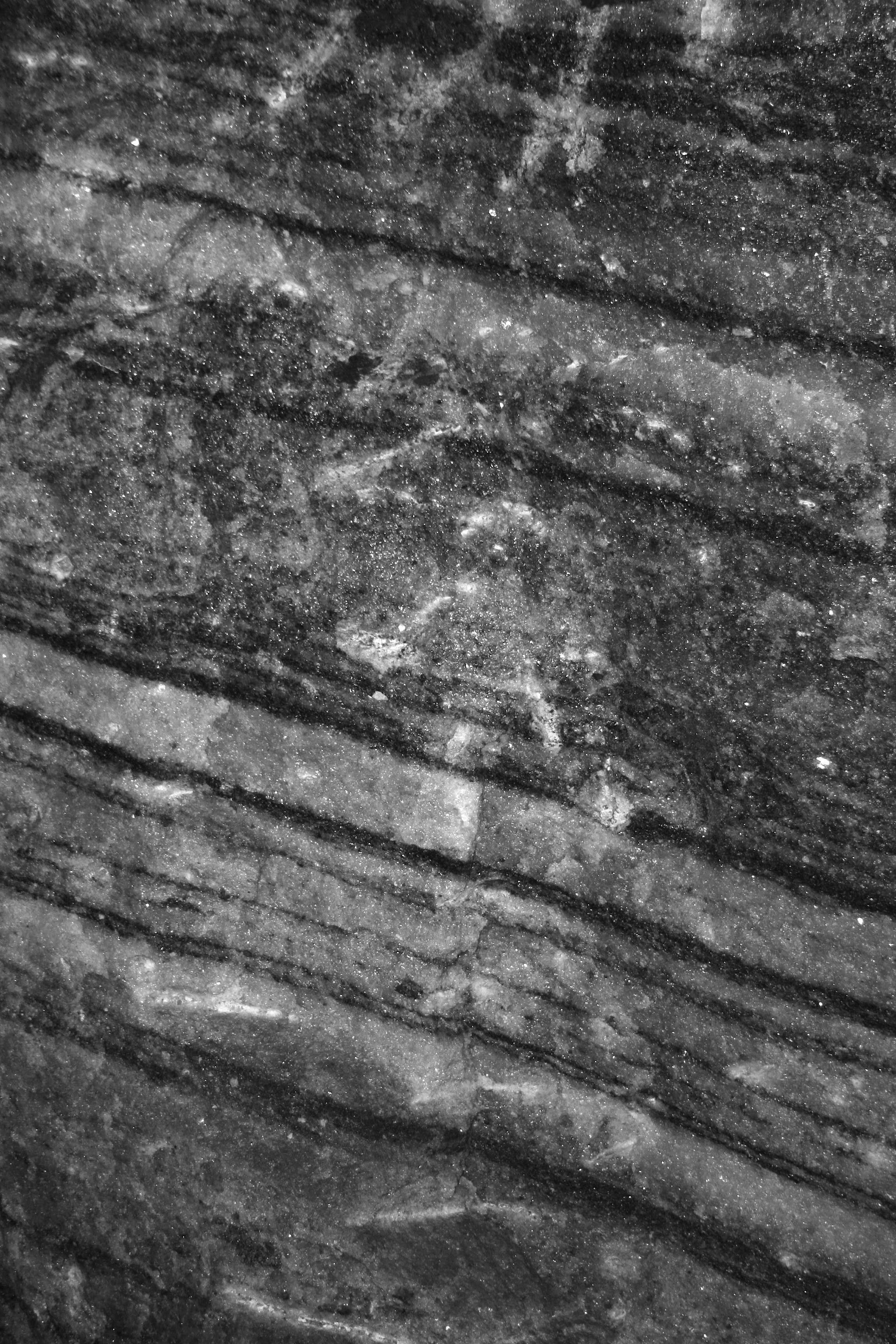
Following the natural path created by the old salt mine, the now cathedral passes by separate areas that represent the Stations of the Cross. Each station contains solid or negative space crosses carved out of the halite, and areas to kneel in prayer. In many cases, the hard and delineated layer cake strata on the walls had been molded and bent through incomprehensible geological strength into fluid water patterns that flowed across crosses and pedestals like tapestry. The most inspiring characteristic of the stations, and the entire cathedral was the careful use of lighting. Crosses were gently yet brightly lit with cosmic blues, whites, and greens in contrast to somewhat melancholy tan and yellows that lit some of the spaces designated for mortal use. Strong white crosses split through the darkness at nearly every corner, but never illuminating a large enough area to spoil the illusion of vastness within the somehow friendly dark spaces.
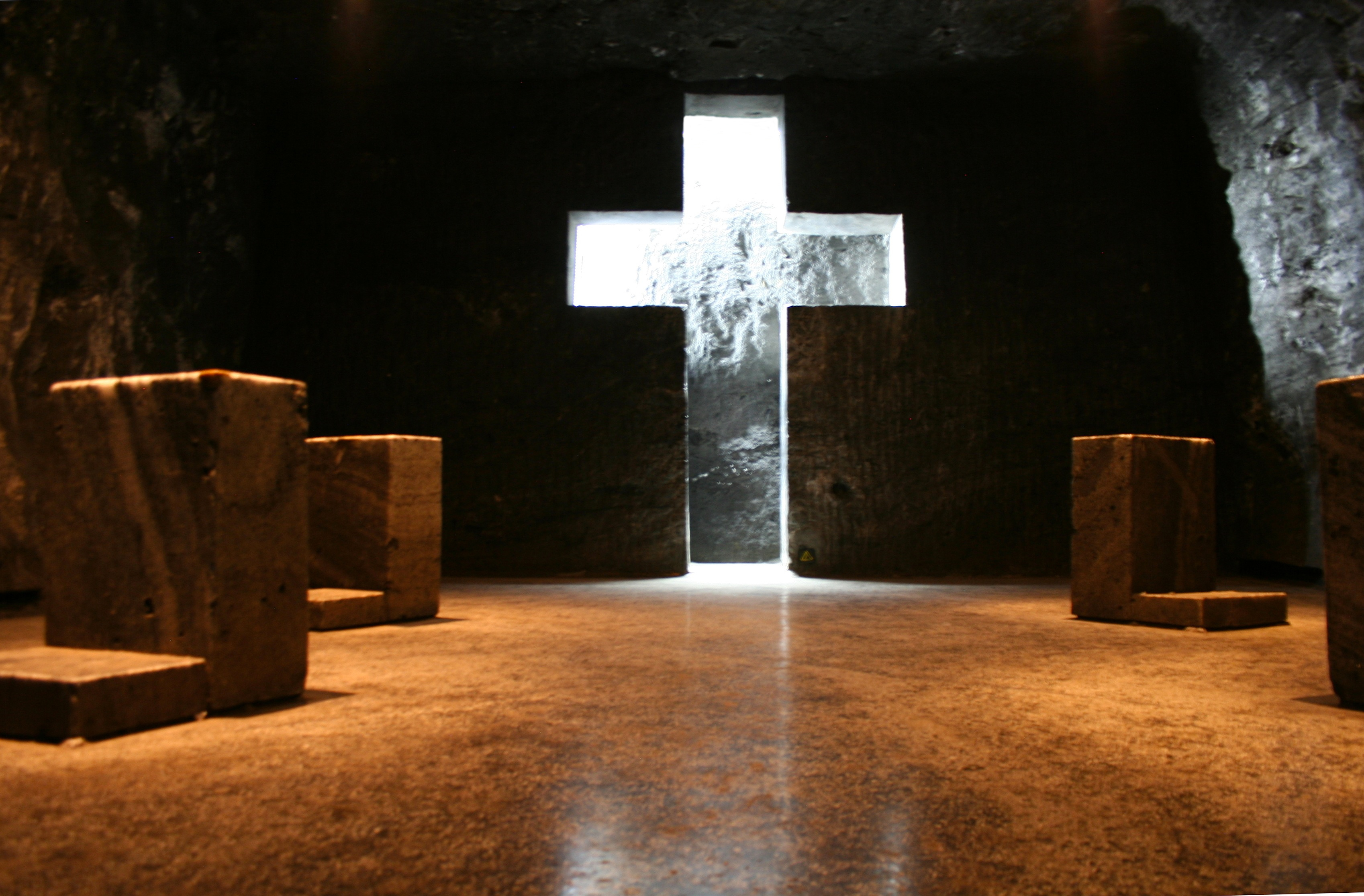
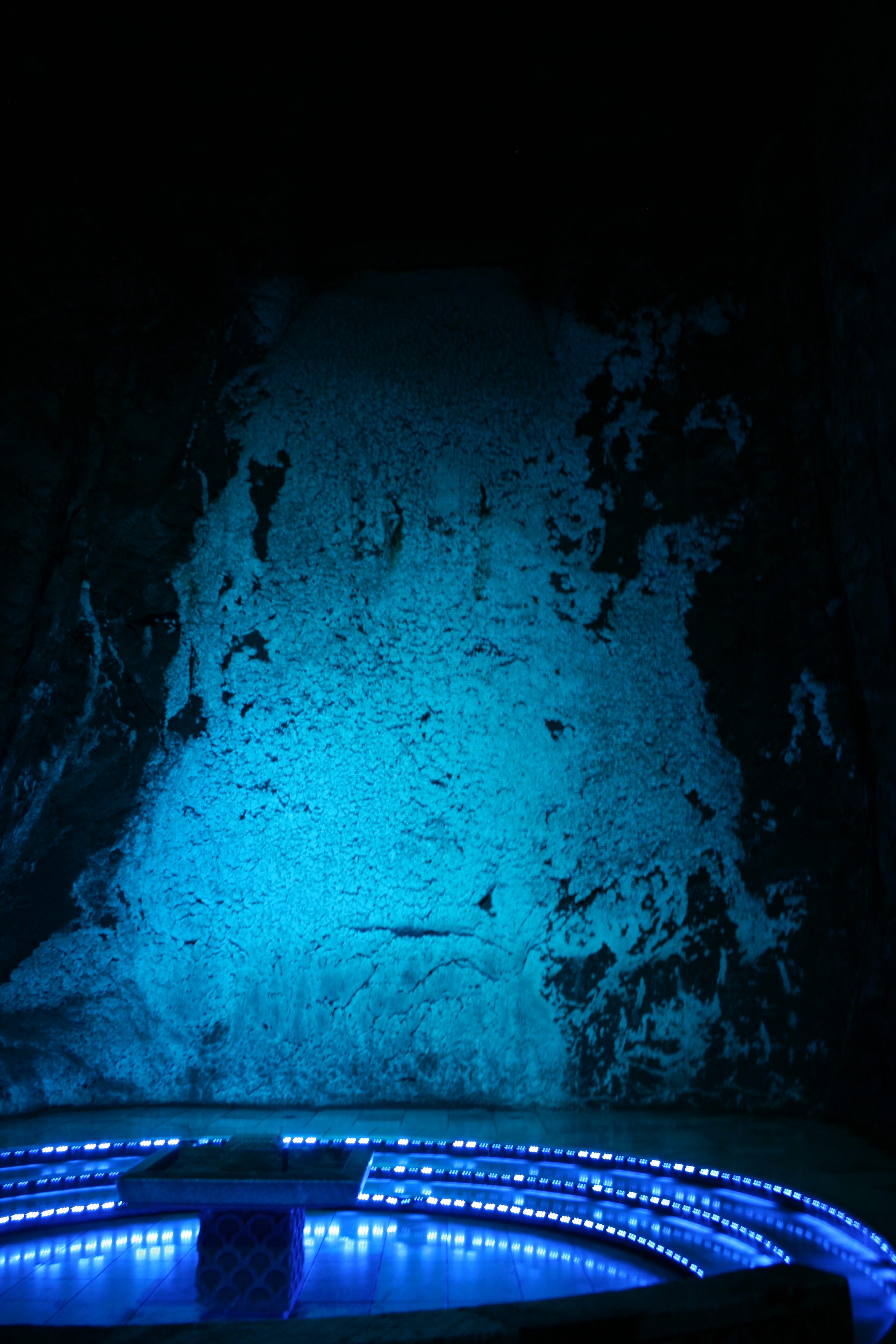
At the end of the stations, there are three naves, representing the birth, death, and the resurrection. In one, a precipitate of dissolved salt from the rock recrystallizes as it flows down the wall in a more pure and white frothy form of a solid waterfall. The brilliant use of lighting allows the imagination to run wild and wonder how high up into the heavens the salt waterfall actually goes. In another, a cross that has been visible for almost the entire walk stands as an empty space, filled with white light, and towers some number of feet over us.
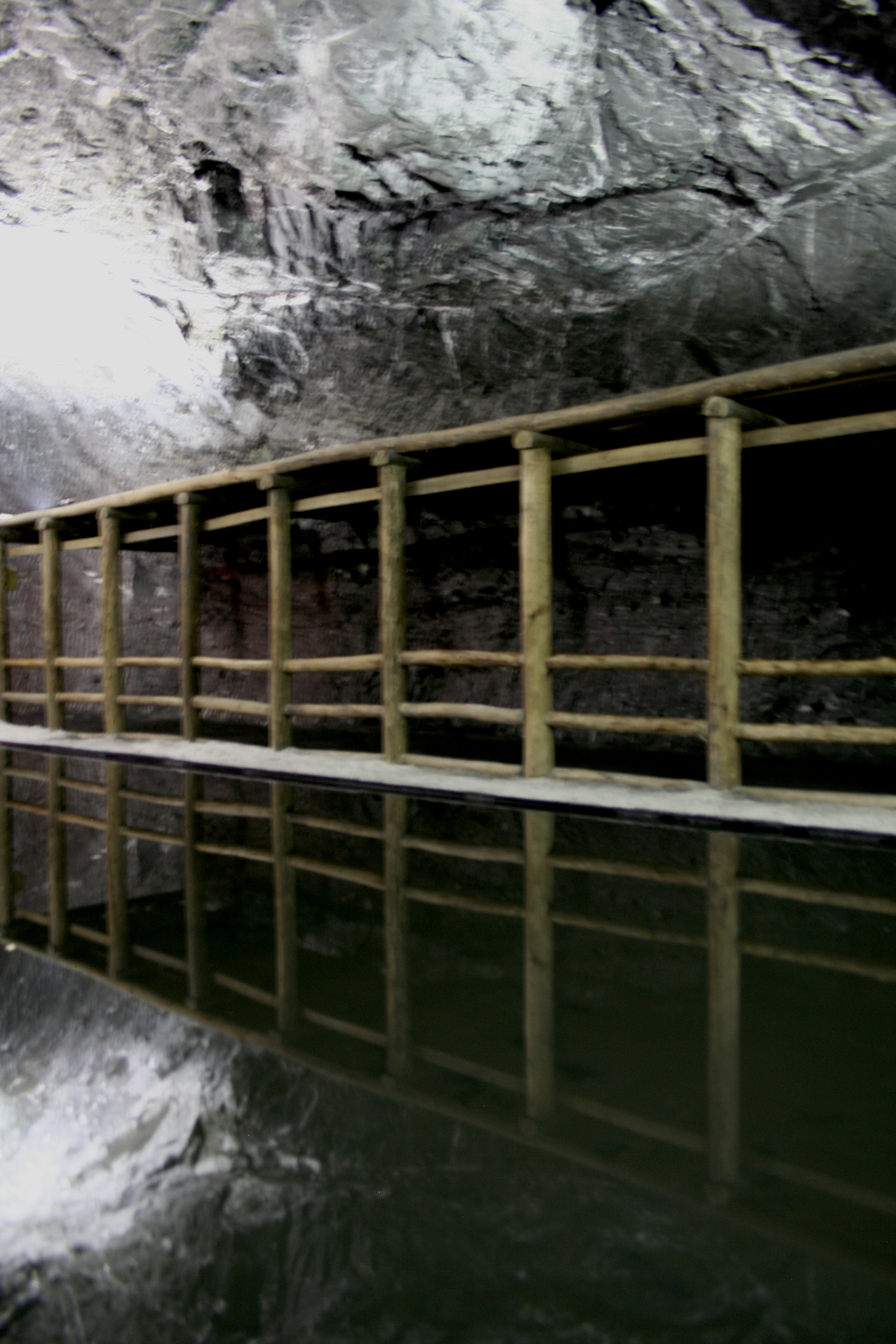
After passing through these sacred halls, each with their own alter, and taking in the shadows of angels strewn across giant spaces. Beyond the four huge pillars representing the evangelists, that come seamlessly out of the floor and grow into the ceiling, continuing infinitely beyond the floor and ceiling; we came to the end. In an isolated corner at this point of the mine and away from everything is a bottomless pit that harkens back to the dark creature of my mind at the entrance to the hill. It plummets straight down, and this time, nothing exists from within it. No tour guide, no parishioners, no happy church, nor even some mutated cave dwelling geckos, just blackness. In my head I could see the end of the pit, a dark rocky spot willed with coins and small things people had thrown in to see how deep it really was. The small trinkets never to return, only seeing a small dot of light at the top, were I stood. In reality though, the pit never ended. There was not bottom filled with coins, no anything. The primary reason for its sterile and black hole nature is it is a complete optical illusion created by a few inches of still water.
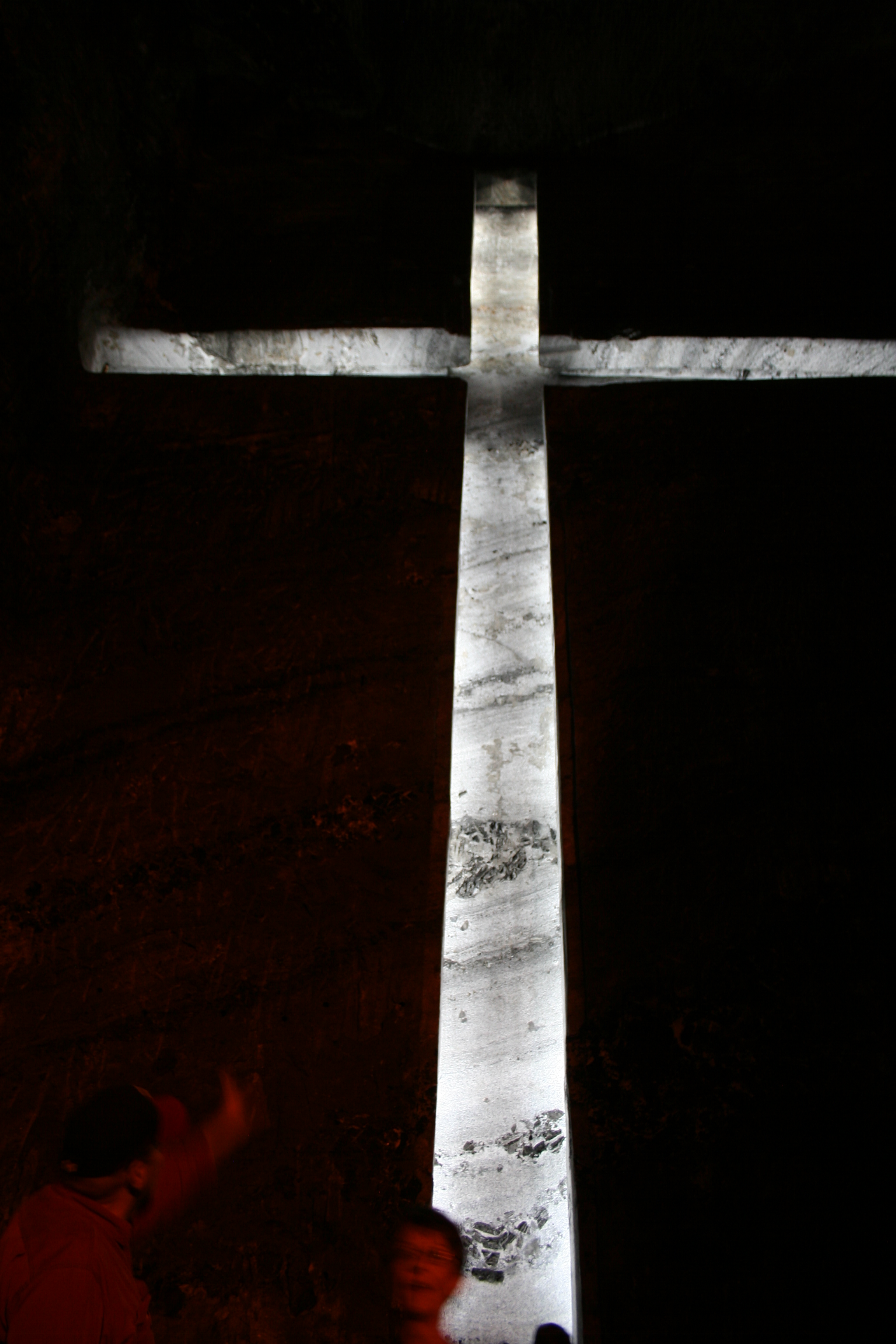
Elements of the cathedral such as the great cross and bottomless pit are shaped perfectly for a thoughtful and authentic religious experience if approached with a certain frame of mind. The cross itself is the most prominent structure of the cavern, and yet it is not a structure at all in the most literal and material senses. There is nothing standing in the space that is the icon, just air and light. For me, it seems obvious to create a link between the Holy Spirit and the cross beyond the simple shape. The actual nature of the thing itself. It is ever-present, the most important, and brightest structure in the mine, yet not physically there. This is all coming from a nonreligious person. The bottomless pit also creates a supernatural experience, but it acts much in the opposite fashion of the cross. While the cross appears as something tangible, but is in a sense not physically there, the bottomless pit takes something tangible and makes it incomprehensible. Here, in a dark corner of this inspiring place is a deep black nothingness that exists only in the mind of the person viewing it. What exactly the pit would mean is hard to say, and though it made me smile at my inability to see past its trickery on my own, it still felt like nothing good.
While every church worth walking into, for religion or tourism is packed with symbolism, the Salt Cathedral at Zipaquirá takes it a step beyond the typical for me. And I thank whoever conceived it for that. The structure itself is an awe-inspiring space that is both vast and comforting, a physical and mental experience, and for me everything that a church should be, minus the gift shop.
23 August 2010
 Steerage Yearns
Beautifully written, I was there and you really explained it perfectly!