
Bunkerisation
Bunkerisation: (verb) the act of packing a country only slightly larger than the US state of Maryland with seven hundred and fifty thousand concrete and steel bunkers. For a different perspective, that is on average more than sixty bunkers per every square mile. It is impossible to cross the border into Albania without tripping over one of their domes.
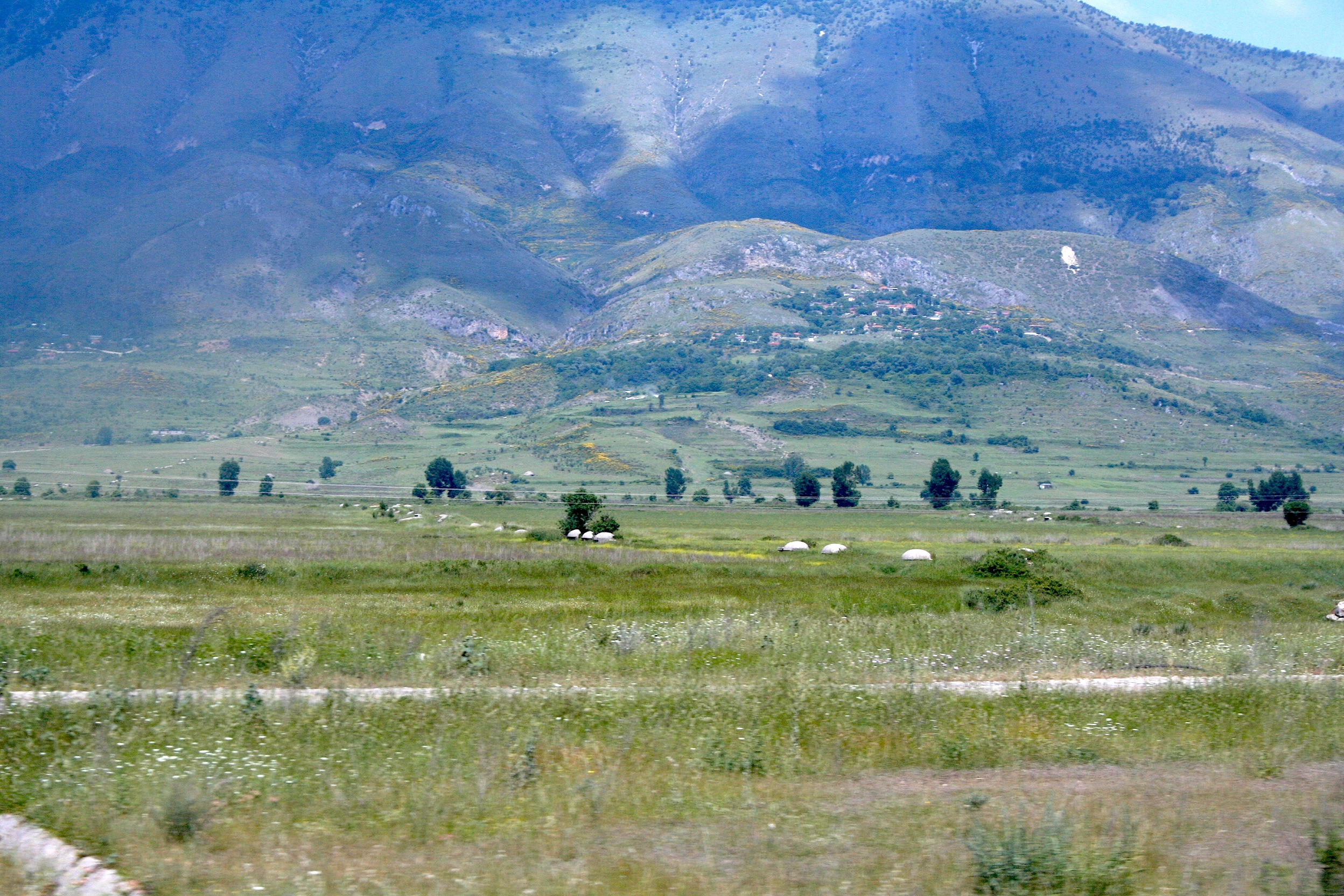
Envor Hoxha (said more like Ho-juh), the paranoid Communist genius behind this scheme, decided it best that every person in Albania only share his or her bunker with three others. The eventual goal was likely a ratio of five bunkers to every one person, but the one country race to see who could cover their entire landmass with the most concrete first ended soon after Hoxha’s death. Sure, the United Kingdom and United States did try to plant anti-Communist agents in Albania, but seven hundred fifty thousand nearly tactless bunkers, this man was diagnosable. Today, the bunkers are physically nothing more than a sometimes dangers set of communist relics. They have been used for battles far smaller than those envisioned by their builders, as shelters for refugees and young virgins, miniature garbage dumps, and septic tanks. They have hidden stores of forgotten chemical weapons, and drown swimmers. Very little good has come of them, ever.
It took me some time to notice the bunkers, even though they are literally everywhere. They sat in the backdrop of the beautiful scenery in the country, and only became unignorable to me after passing a field that contained rows of them. It was almost embarrassing for me to spend more than two full days in Albania and not grasp the magnitude of their presence. I rationalize my lack of awareness largely through the natural splendor that occupied much of my attention. The large number of bigger unfinished and abandoned concrete buildings may have also contributed to my miss.
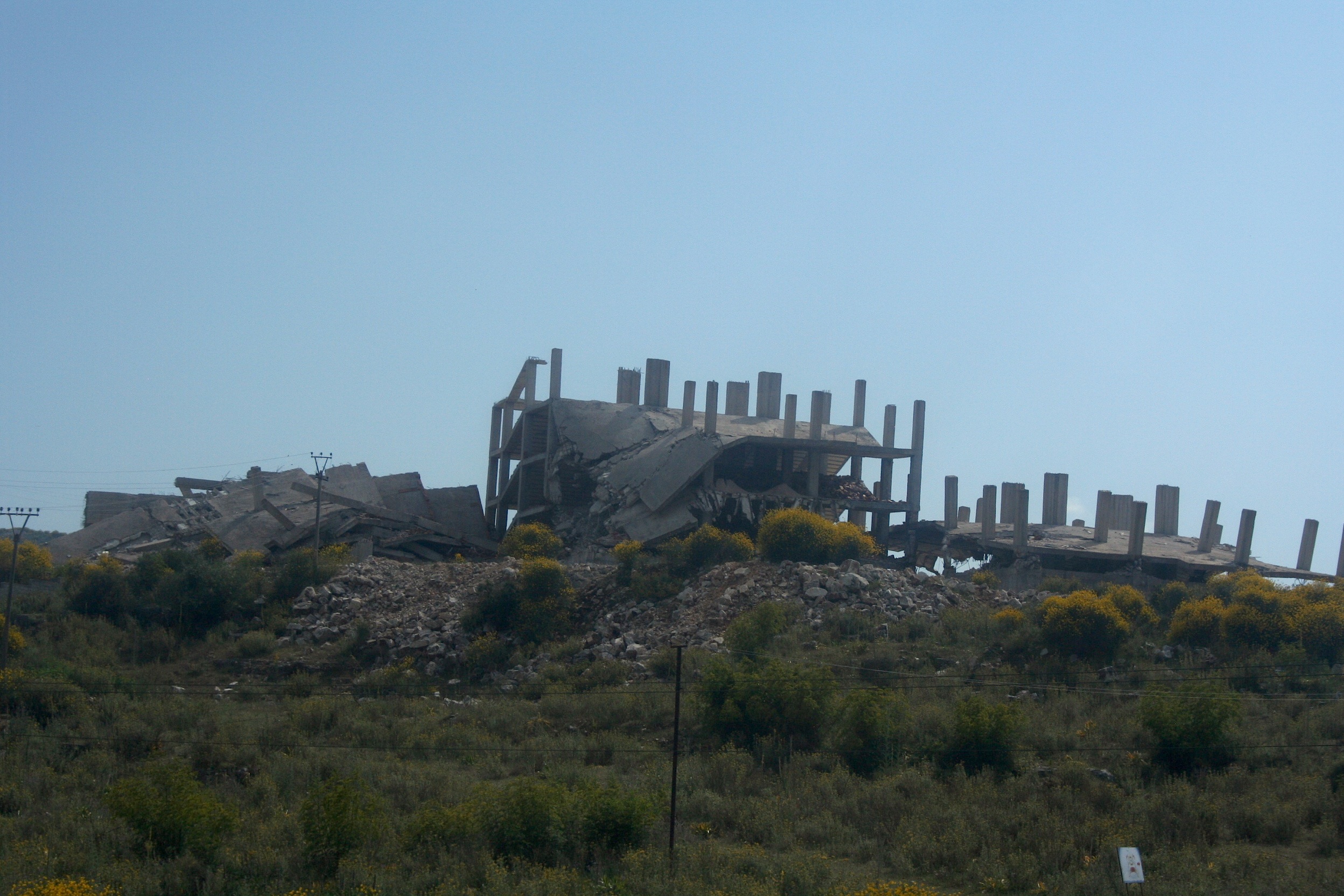
Despite their sorted history, a few interesting ideas have been proposed for what to do with the mostly personal sized dugouts. Public restrooms, information stands, and kiosks in the small ones. Bed and breakfasts, café’s, and shops in the larger ones. It is a romantic notion that I can latch onto; utilize the bunkers for peaceful and even prosperous purposes. But in reality, they are not just historic litter; they are the most visible and difficult to destroy memories from decades of being cut off from the outside world. Memories like those of a xenophobic leader who isolated his countrymen. There is a certain amount of emotion in the bunkers for many people. Never mind the logistical fact that a vast majority of the structures reside out in fields and up on mountaintops, away from urban centres, away from anywhere a lonely backpacker would be looking for a map.
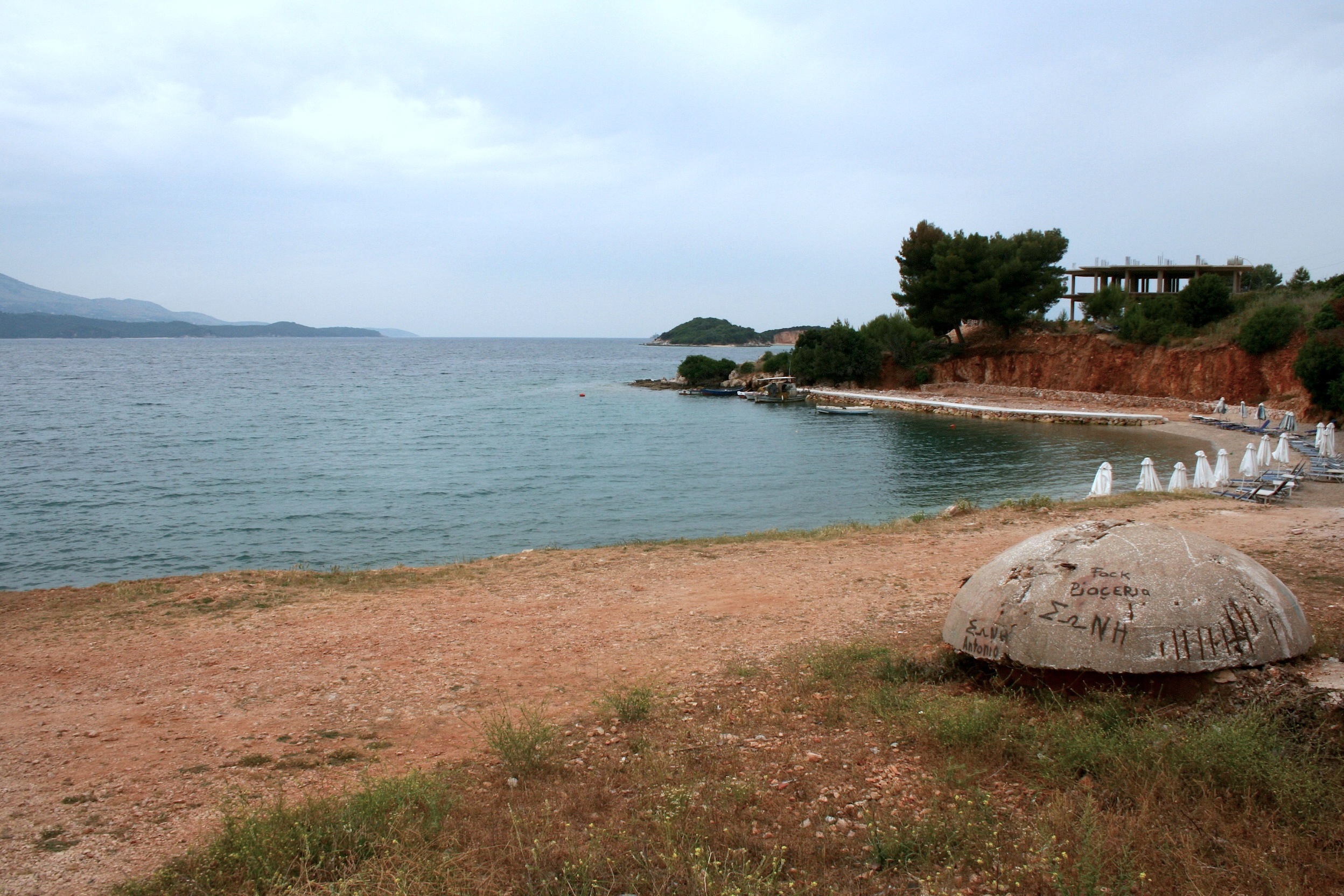
It is not all gloom and baseless wishful thinking; there are success stories of people reinventing the bunkers. Restaurants have employed them as cellars or stands, and the concrete mushroom is a staple of the very young Albanian tourism sector. With Albania now open to the outside world, and the natural beauty and historic interest of the country making its way onto some tourists’ interest lists, it may be that the reutilization of these bunkers will prove to be a great asset for the country. Backpacking tourists might need that map in the field I mocked between Tirana airport and downtown. It would be a fun story to tell people back home that you spent your time in Albania hopping across the country from Communist bunker Bed and Breakfast to Communist bunker Bed and Breakfast.
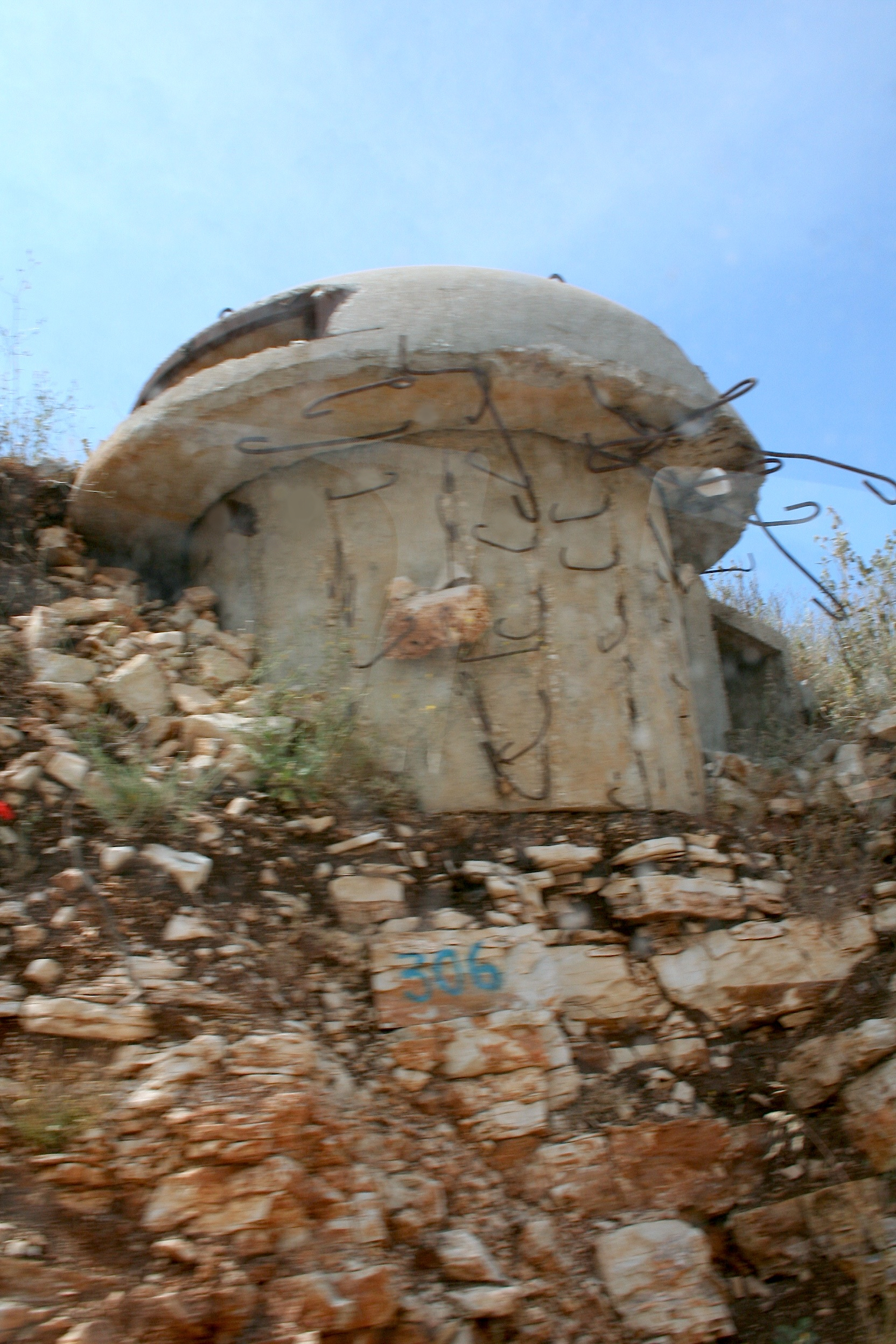
I personally have mixed feelings about the bunkers. As an American not even old enough to remember the political situation of Albania more than two decades ago, I think they are fun. An icon for the country that has a lot of potential in some cases to be transformed from obligatory empty messes into useful and one-of-a-kind structures. They are a lasting memory for anyone who has visited the country. Museums are great and full of history, but many things end up preserved and restored to the point that they lose their personality. The bunkers of Albania certainly have personality. They collapse in strange patterns, are covered in art, and are in the way. They are in that sense honest, much like Stalin’s train car in Gori. There is no chance of altering history by removing them or putting them into museum storage.
On the other hand, I can sympathize with those who would prefer the bunkers gone all together. They take up land and are dangerous. Removed from their history, I would love one in my back yard. Though typically small, the land in fields they occupy when placed in row after row is not necessarily insignificant. Neither is the fact that they can be death traps as they age and disappear under sea’s waves or erode out of hillsides above roads. The most difficult obstacle still remains reconciling the meaning and the history of the bunkers.
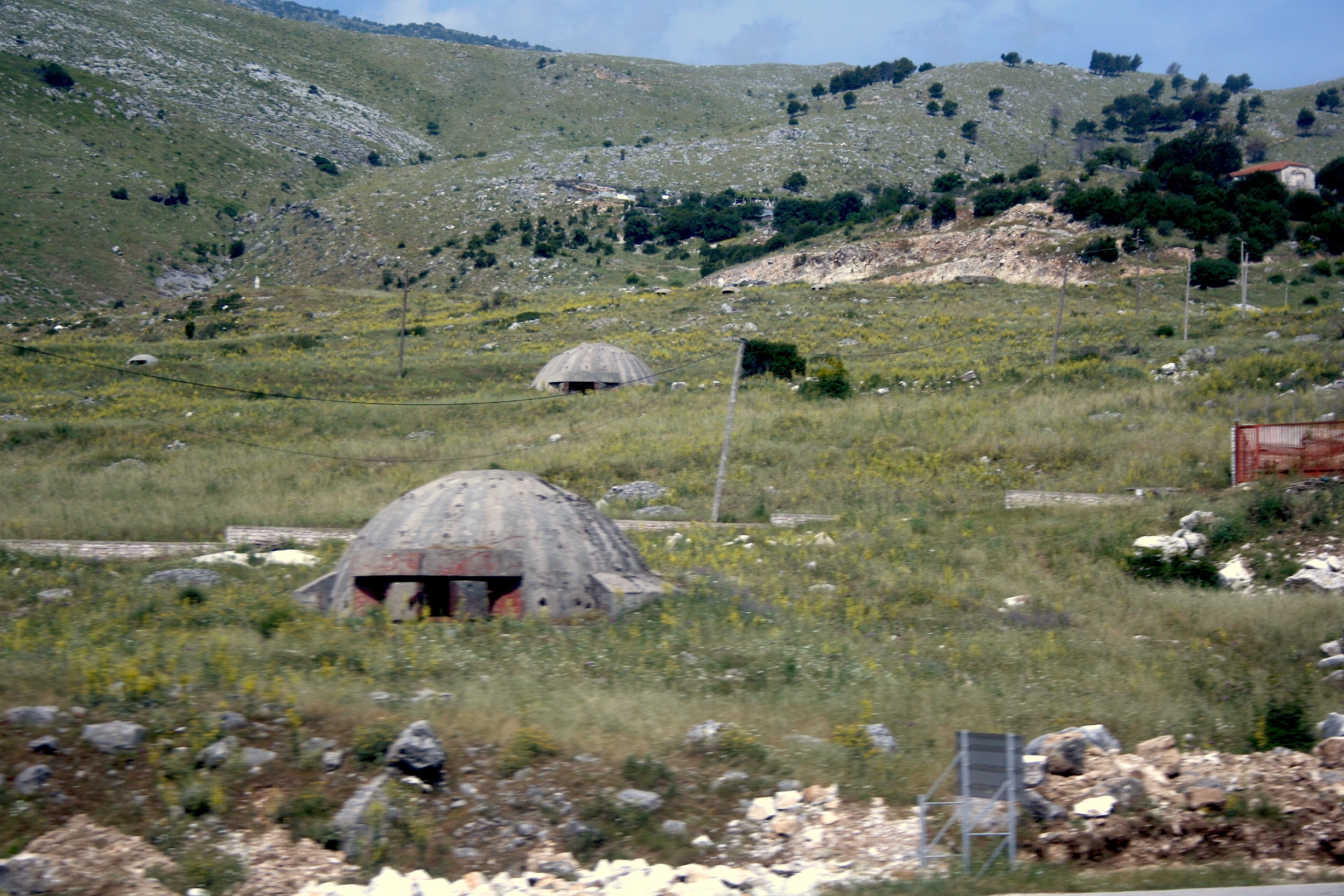
In a hundred years, when no one living personally remembers the Communist reign, will anyone care about the bunkers? Will they just be an annoying historical reality, bothersome for no other reason than the space they consume and the rubble they shed? Maybe it is for the best that most of them fade like their memory with time, slowly into unused and overgrown oblivion. Just a few concrete domes left as a reminder to their once ubiquitous existence.
6 June 2011
Links:
http://concrete-mushrooms.com/files/concrete-mushrooms-final.pdf
 Steerage Yearns
Reblogged this on RD Revilo.