
Seanamarena
Lesotho (Leh-soo-too) is a tiny enclave of South Africa situated high in the Drakensberg and Maloti Mountains. It is often called the Kingdom in the Sky, and for obvious reasons. It is the only country that sits entirely higher than a thousand meters above sea level. Its lowest point is 1,400 meters or just over 4,500 feet. It has the highest low point of any country, if that makes any sense. Situated up and away from the rest of the world on its somewhat violent terrain, Lesotho is in many respects untouched. It is nature in an almost pure form for miles and miles without the need to pay a National Park entrance fee. The culture of the people living there is equally untouched and unique to the country. However, Lesotho is not without its external influences. It has one of the highest HIV/AIDS rates, one of the highest poverty rates, and one of the lowest life expectancies of any country on earth.
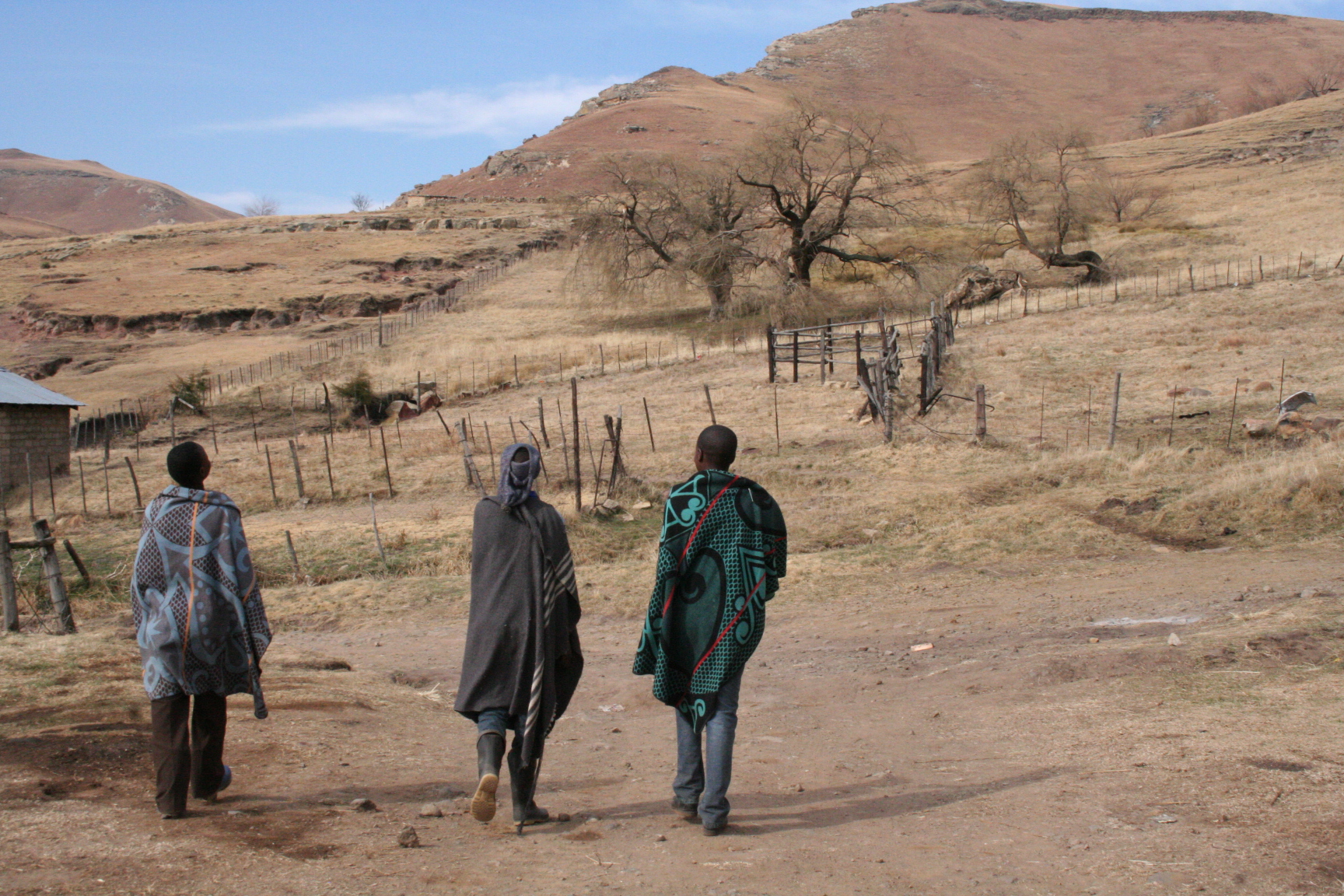
Lesotho, like a few of the places I have written about so far is a little, or a lot, off the beaten path for most travelers and tourists. I intended on writing maybe one entry about it that described it all. Lesotho is small, most people have never heard of it, those that have mostly cannot pronounce it, and frankly the odds of someone reading this and going there is minimal. Anyone who read though the entry I had planned would learn maybe how to pronounce Leh-soo-too, and would attempt to find it on a map. However, the more I thought about it, the more I recognized that it is a landscape that cannot be boiled down to a couple of paragraphs. It is a culture and countryside rich in history and tradition that deserves far better than a simple summary.
First, let me get a couple of words out of the way. They all rhyme with Lesotho. Basotho, Masotho, Sesotho. Lesotho is the country. Basotho are the people that live in Lesotho. A Masotho is a member of the cultural group Basotho. Sesotho, also called Sothfo, is the language spoken by the Basotho in Lesotho. Got it? While we are on that note I want to make it very clear that Lesotho is not South Africa. It is nothing like South Africa. Lesotho is a country of Basotho people. Lesotho is a country entirely in the mountains. South Africa on the other hand is a salad of many different cultures across a huge range of ecosystems. They are unambiguously tied together as one resides completely inside the borders of the other, but they are in their own right two individual places.
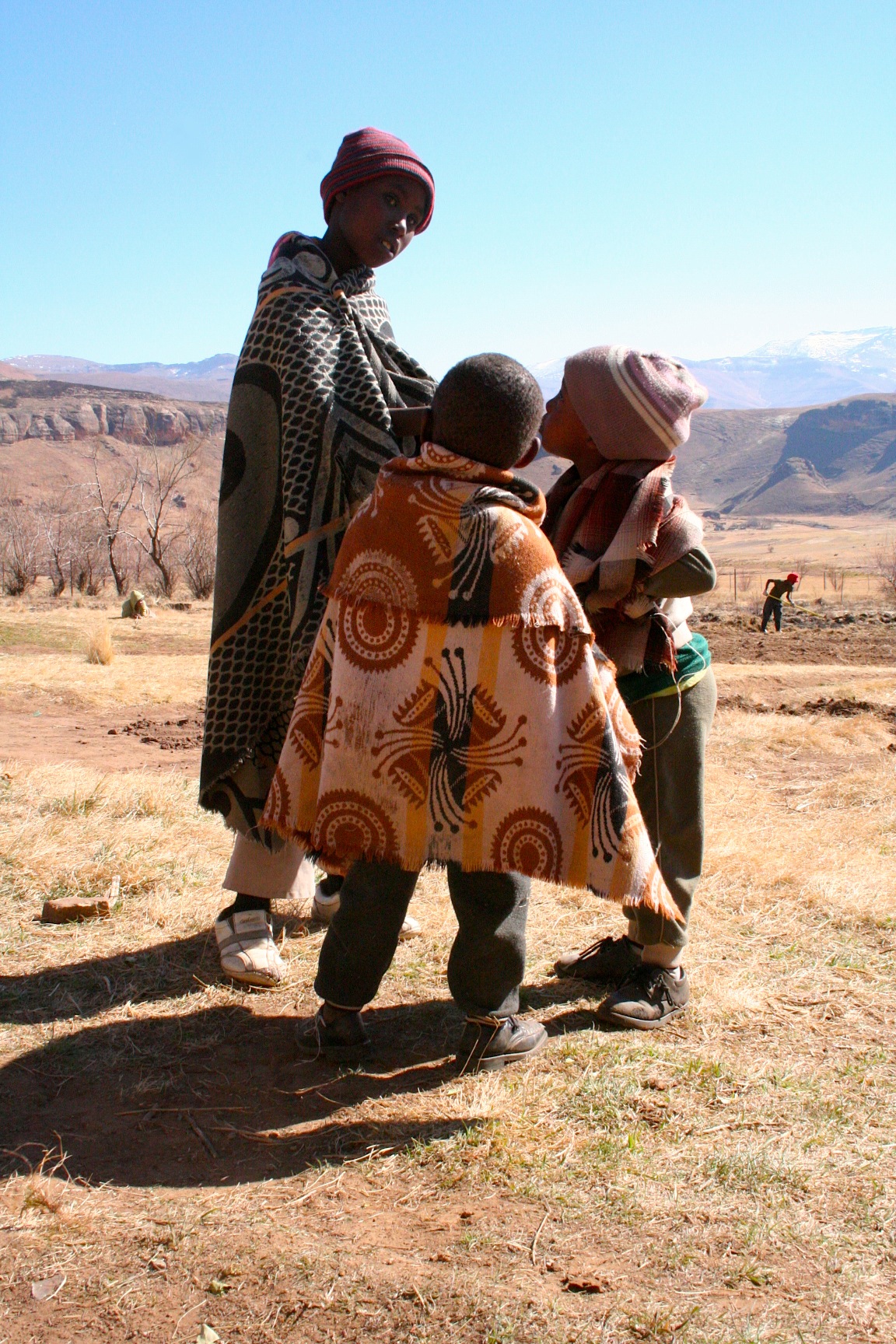
One of the most iconic things about Basotho is their blankets, Basotho Blankets or Seanamarena. They are worn almost everywhere, in any weather, and for any occasion. They are ubiquitous. Now, cultural clothing, its associated meanings, and signaling uses are extraordinarily complex topics, and I will not do them justice. I only hope to make a point about trying to appreciate the complexity and interest of something that may register for visitors as only a passing interest and souvenir opportunity.
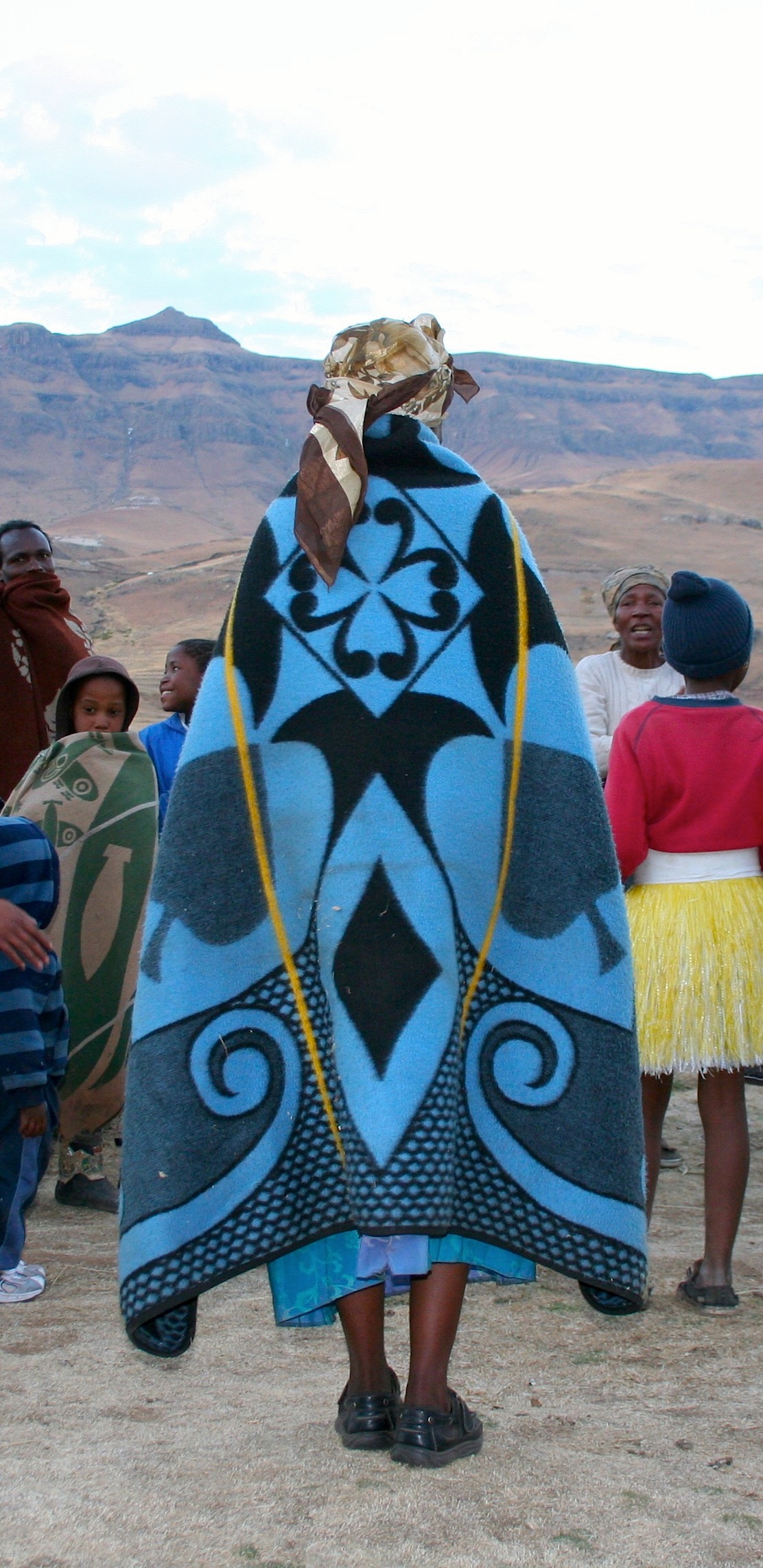
Made mostly of wool and a little bit of cotton, Seanamarena appear at first to be an ancient traditional accessory that conveys status. They are also rather functional in the often times cold mountains of Lesotho where many villages are without electricity. The history and underlying meanings would however be lost if one looked no further. And why would anyone look any further when that makes so much sense? It gets cold in the mountains, so they wear warm blankets. Better yet, the casual observer can assume to see some social stratification of the people living in a village based on the colour or design of their blanket. It is a very comfortable and somewhat pretty picture. While Seanamarena of Lesotho are undoubtedly a mark of cultural identity, of which their wearers are often very proud; Basotho Blankets, like many things in Africa, are a result of colonialism.
The use of blankets can be traced back to European traders of the 1800s. Before that time, traditional and warm wear in the area would have been centered on animal hides and furs. Early on, the blankets were intended for use by European citizens on horse drawn carriages, as decorative and functional packing material, or on railroads. Traders arriving in Southern Africa from Europe used the fashionable yet clearly functional blankets to trade with locals for goods along the way. Adoption of wearing the blankets by one of the country’s Kings, and scarcity of animal hides from outbreaks of rinderpest increased their use in the last centuries, and made the Seanamarena‘s visibility what it is today.
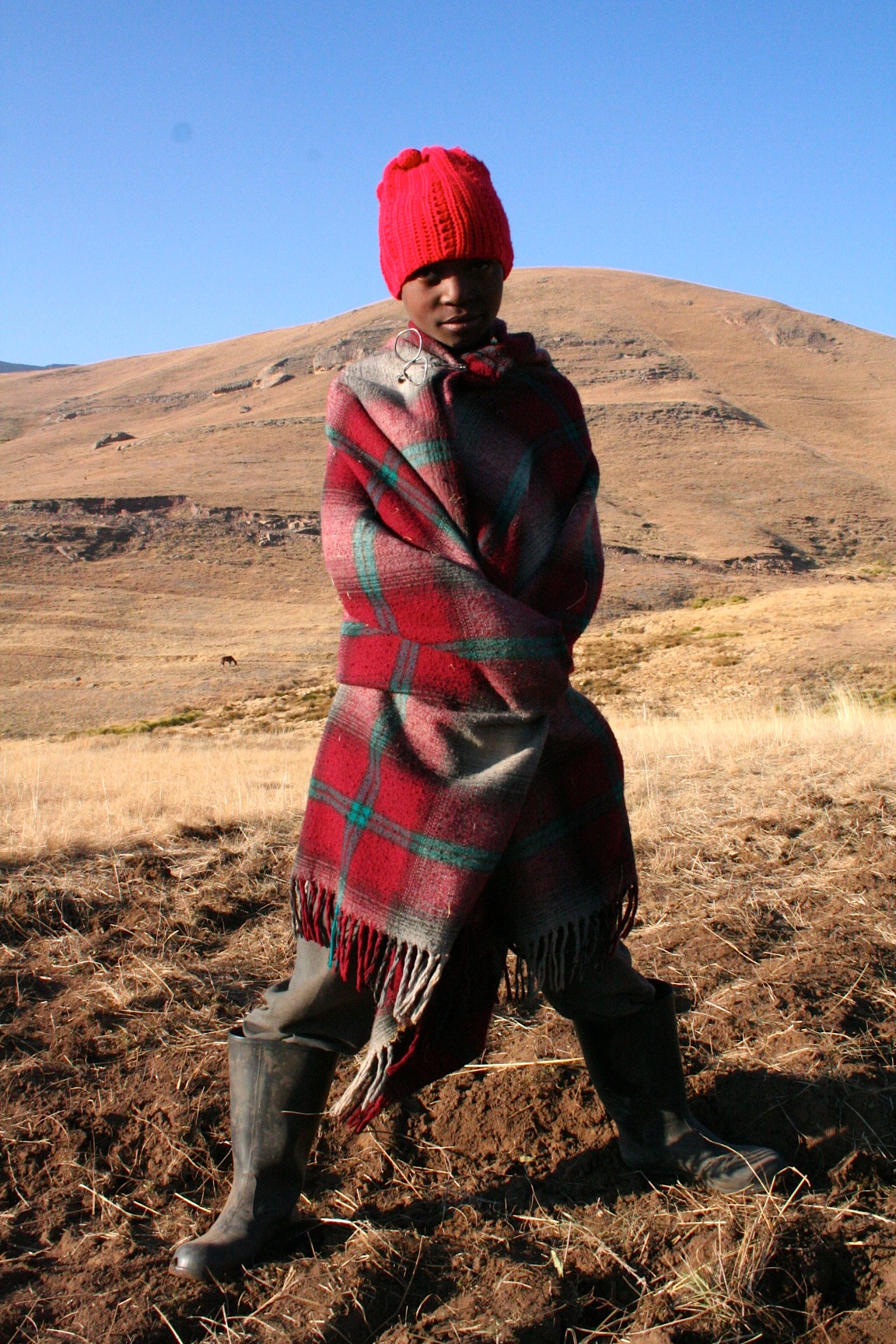
Even in their rather recent history relative to the long human occupation of southern Africa, the meanings of different Seanamarena patterns has exploded. While always an obvious symbol of a larger cultural identity; the blankets are used to signal many very specific affiliations such as local group, gender, age, marital status, or the celebration of a holiday. What was once a poorly manufactured blanket for any number of daily activities in England now can be used to identify a woman from across a field who has just given birth to her first child. Common motifs of blankets today include solid colours with stripes, leopard print, and a corn like pattern. In general, the simple patterns are worn by children, wrapped around the deceased at a funeral, or worn by those attending a funeral. Styles reminiscent of leopard print are less common and worn only by those with royal background. This harkens back to the Leopard Skin Chiefs of the Nuer, who wear actual leopard skin clothing to display their importance. Lastly, the corn motif is often a symbol of fertility and is rather common in some areas.
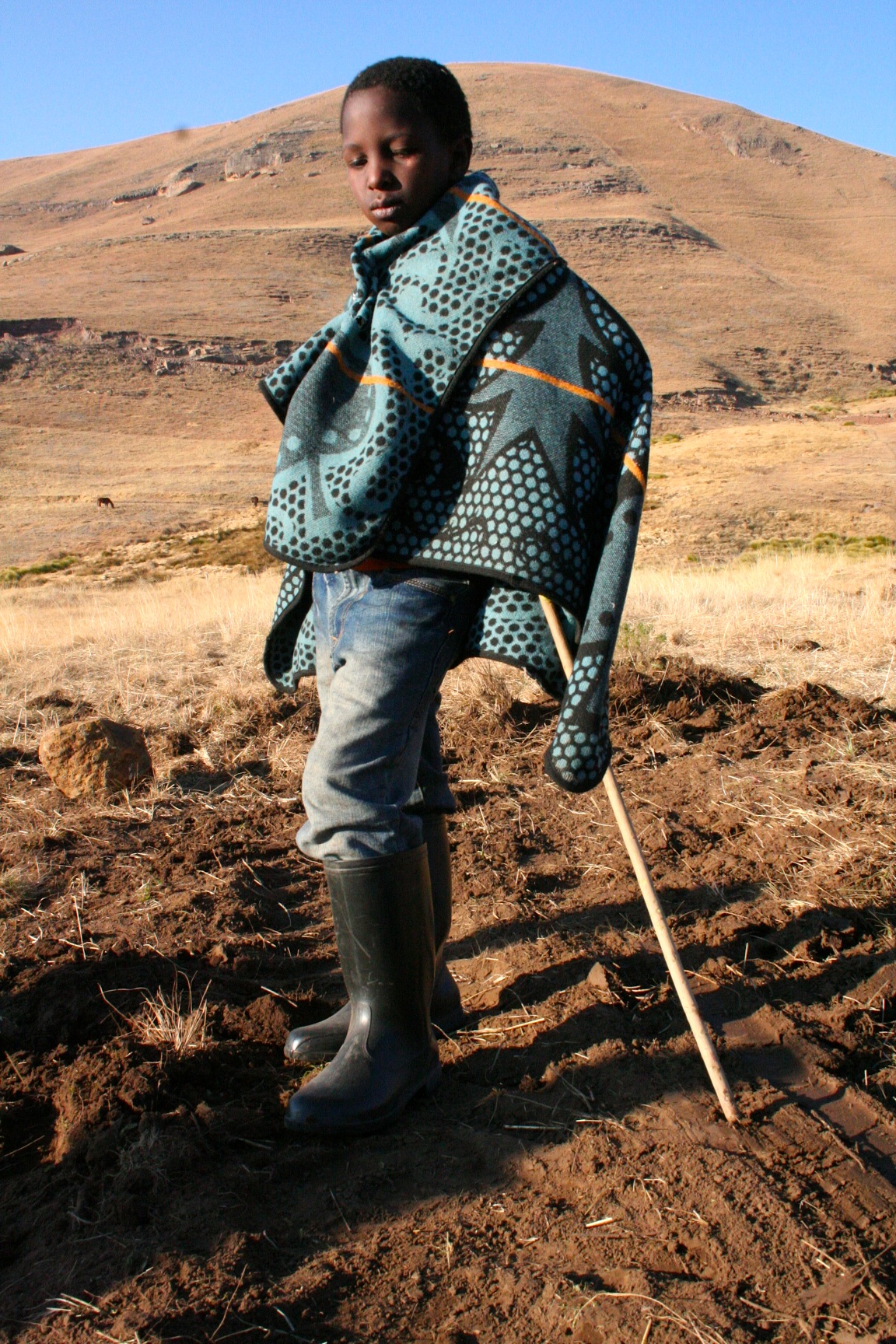
As with most traditional items in the globalizing world, their meanings are not always strictly adhered to by locals or the rest of the world. Basotho Blankets have popped up on the high fashion scene from time to time, and tourists who venture into Lesotho often buy blankets that were made for their stylistic appeal rather than their connotation. After all, if everyone wearing a King’s blanket were treated like a king, there would be some new interesting dynamics being injected into local villages. For example, the two green and blue blankets I brought back from Lesotho are typically used by women to carry their young children or as saddle pads. Hardly kings’ fashion, but I find that they come full circle from the days when they were used in horse drawn carriages.
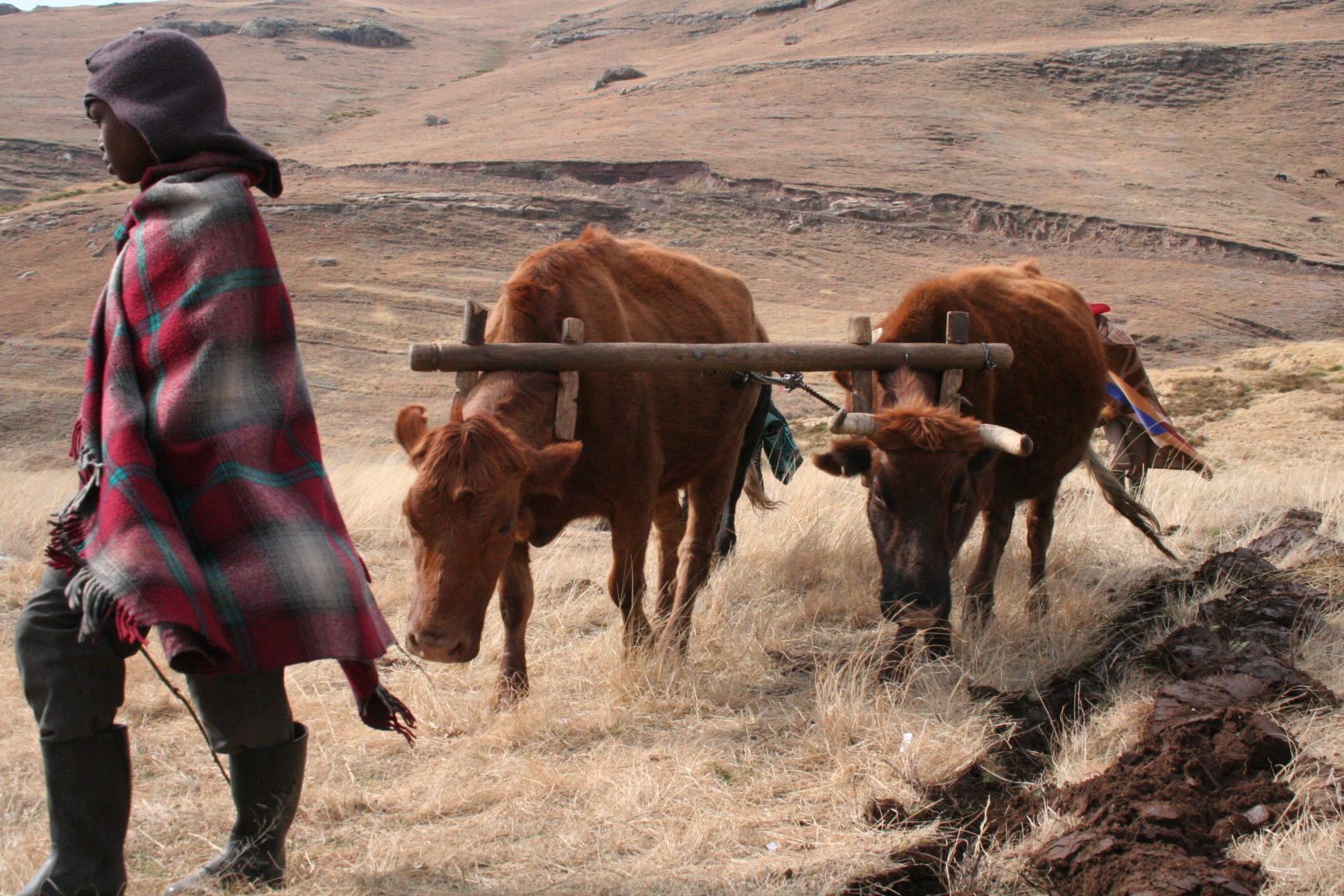
There is no real comprehensive work that describes the meaning of the patterns and colours of Seanamarena. At least not that I have been able to find. The two most useful sites I have attached below. For the time being, I just want people to have a brief glimpse into the history of the very iconic and somewhat misunderstood Basotho Blanket. And for people to always remember that the story behind something is likely much more interesting that how it initially appears.
http://maliba-lodge.com/blanketwrap/tag/seanamarena/
Click to access safrica2006.pdf
 Steerage Yearns
I want some of these blankets, they’re so beautiful, I love the whole story behind them.